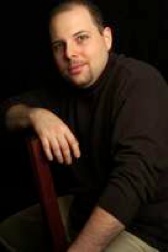
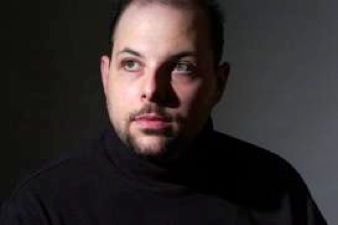
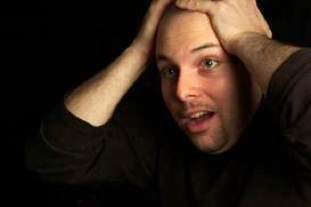
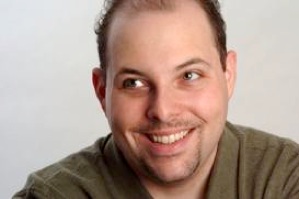
One of the rewards for writing music reviews and artist interviews is that I have found a lot of great music that I wouldn’t have heard otherwise. Another is that once in awhile I also find a person who is truly an inspiration. Matthew Zachary is one such person.
During the summer of 1995, before his senior year of college as a music major, Matthew was diagnosed with a cancerous brain tumor the size of a golf ball. The doctors didn’t know if he would survive, let alone walk or play the piano again. After the surgery to remove the tumor, Matthew found that he could play the piano - but pretty-much at the level where he first started lessons back in 1985. He wasn’t out of the woods yet, though. Since this form of brain tumor almost always occurs in children younger than eight years old, even the experts weren’t sure how to treat Matthew’s case, and left some formidable decisions up to Matthew and his parents. Next came several months of radiation therapy, and a long, difficult struggle with its side-effects. Matthew also had to re-learn to walk and swallow, along with many other physical things most of us take for granted. Still, music and playing the piano were where he found his identity, so he disciplined himself to play the piano and compose music for 10-20 minutes a day; he slept most of the rest of the time. He jotted down his musical ideas on manuscript paper, and referred to those notations as his “scribblings.” In 1999, Matthew developed those notations and put together his first CD, appropriately titled
Scribblings. In 2001, he released a second CD called
Every Step of the Way. I received both CDs at the same time, along with a comprehensive package of biographical materials, press clippings, and other information. As I listened to the music and read through the materials, I was overwhelmed with what this young man has endured and what an amazing gift he is giving the world with his music and inspirational/motivational talks. One of the things I noticed when I listened to the CDs was how much stronger Matthew’s left hand playing was on the second album. Then I started exploring his website for more information, and learned that one of the symptoms of his brain tumor was that he was losing the control of his left hand. He had also had terrible headaches and fainting spells, but it was the deterioration of his left hand that upset him the most. After the surgery, he could use both hands again, but he had to start all over to train the muscles and nerves to respond. When Matthew recorded
Scribblings, the use of his left hand was back about 60%, but it had improved tremendously by the time he recorded
Every Step of the Way. Instead of looking for a recording contract, Matthew has been distributing his music through medical channels more than the traditional media markets. His CDs are used in many pediatric as well as adult cancer wards and centers, and his music is often used to calm children before they have their cancer treatments. From this usage of the music, one might assume that it is very simple and uncomplicated, but it isn’t. Still, people of all ages respond to Matthew’s message and upbeat philosophy. He wants people to grasp that since he was able to survive cancer and beat the odds, they can, too. It seems that at the ripe old age of 28, Matthew Zachary has experienced more than most people do in an entire lifetime. He has dedicated his life to helping those who need it most, through his music and his message. This is his story:
KP: Where and when were you born?
MZ: Wednesday, May 29, 1974 at 6:35 PM, Maimonides Medical Center in Brooklyn, NY.
KP: How many brothers and sisters do you have? Are any of them musicians?
MZ: My younger brother, Benjamin, is 24 years old and plays the radio. His lack of musical talent is more than compensated with his expertise in sales and marketing.
KP: What are/were your parents’ occupations?
MZ: Both of my parents are educators. My mother has been teaching first grade for several dozen years. My father retired last week after 35 years teaching occupational education at the high school level. My father is a jack-of-all-trades and, besides teaching, has had professional side careers in carpentry, gold and silver smithing, automotive mechanics, culinary arts, and just about any other occupational trade.
KP: How old were you when you started piano lessons? How long did you take formal lessons?
MZ: In 6th grade, I came home one day to discover that my father had bought my mother a small spinet as a present for her 30-something birthday. I was more upset that they moved the furniture around than anything else. At the time, I was being forcibly taught trumpet at school since music was a requirement. My mother had played the piano as a child and, with this gift from my father, was now able to revisit her roots. I walked over to her one day when she was playing, and simply asked, "Where do you put your fingers?" The rest is history. I was classically trained by a Julliard graduate from age 11 through 18. In college, I continued my classical training through my freshman and sophomore years. I had roughly ten years of formal lessons.
KP: Were you encouraged to improvise or compose by your piano teacher?
MZ: Absolutely not. She was "old school" and felt that there was no room for improvisation, merely creative interpretation of pre-existing music. Amidst the Debussy, Chopin and Bach, I had the audacity to ask her if I could learn to play the theme from St. Elsewhere. Needless to say, I learned that piece (among thousands of others) on my own, unbeknownst to her, throughout my studies. I also bought a synthesizer/keyboard and a beatbox and started experimenting with electronic music - all without her knowledge.
I took one year of jazz studies in high school which was the creative and artistic antithesis of my experience with formal training. My eyes were opened to a whole new world of musical breadth. My jazz teacher was very traditional yet wholely encouraging. He taught me how to read lead sheets and fake books, how to improvise, and how to comp as if I were part of a big band. All in all, a worthy learning experience. At college, I was again concert-trained, this time by a man who had never heard of Frank Sinatra. He was all about the classical genre and was one of the most talented concert pianists I had ever had the privilege of knowing and learning from. He obviously did not encourage improvisation since it was not permitted within the genre, but he was most helpful in helping me to develop my expressive and interpretive methods.
KP: Did you play in school orchestras or bands?
MZ: Beginning in 5th grade, they stuck a trumpet in my hand and made me play it, in accordance with the music incentives of the city school system. Trumpet turned into baritone horn in middle school and I stuck with it through the end of high school (while simultaneously cultivating my piano career). I joined the marching band in high school and, for what it's worth, had a really great time. I do not miss my brass past, though. I played piano in a few bands in high school, mostly for school events like talent shows, musicals, and/or concerts. While in college, I had some solo piano and synth gigs as well as a seat in the jazz band.
KP: Do you play other instruments?
MZ: I picked up guitar and managed to learn two or three chords, but with my stubby fingers, it just wasn't meant to be. At college, I learned to compose for virtually every instrument and managed to come up with some fairly intriguing orchestrations. The piano remains my one and only instrument.
KP: How old were you when you started improvising?
MZ: Probably the first day I began playing. I would come home from piano lessons and instead of practicing what was on the page, I 'd make stuff up, change the endings, play it backwards - anything but what was actually on the written page. I didn't have formal improvisatory lessons until my junior year of high school and then again throughout college.
KP: How old were you when you wrote your first song?
MZ: You're making me dig up painful memories! I was 15. Summer camp. I wrote an alma mater (music, no words) for the camp to sing at the end of the summer, but no one liked it except me. I'm sure it was total crap, but I believed in it. That rejection was a blessing because it heightened my determination that someday I would "invent" music that other people would like.
KP: Did you play with any rock bands in high school and/or college?
MZ: Nope. No rock bands. Whether on purpose or not, I steered clear of pop music. I had no interest in being part of a band. I always wanted to be the star. Blame my parents.
KP: At what point in your life did you know or decide that you were going to be a professional musician? Did your parents resist or object?
MZ: My parents have been with me through thick and thin, unconditionally supporting any decision I have made in my life - for better or for worse. I began college as a mechanical engineering major destined for a career in prosthetics and/or biomechanics. Within six weeks, a 7 AM Organic Chemistry III course took its toll on my psyche and I switched majors to music. Within several months, I had carved out an independent major combining the music and theater majors with a computer science minor. By the time my junior year rolled around, I had decided that I wanted to be a film composer and applied to several schools for consideration for grad school. I think that may have been the first time I decided to be a professional musician. After my illness, I only wanted to rebuild my life, and the safest way to do that was through my rudimentary knowledge of computers. I forged a successful career in computer technology consulting. January 10, 2001 was my 5-year anniversary in remission from cancer. I threw a huge party and realized only then that my destiny was to be a professional musician. I quit my computer career on June 15, 2001 and have never looked back.
KP: When did you start playing professionally?
MZ: September of 1991. From age 17-18, I was the evening lounge act on Fridays and Saturdays at La Botte Restaurant on Staten Island. It was so much fun and I got to learn every Italian song from here to Sicily. That was truly a great time for me to both personally and professionally synthesize the myriad of genres and styles I had become proficient in. It was quite a novelty to see a 17-year-old playing My Way, Mala Feminina, The Lady is a Tramp, and If You Get Caught Between The Moon and New York City - all the while schmoozing the crowd.
KP: In college as a performance major, were you planning to play your own music or other people’s music?
MZ: It was at college when I solidified my need to compose and perform original music. I love to kick back and play tunes written by other composers - but there is such a sense of personal satisfaction to continuously reinvent your own imagination.
KP: What was it like when you started having the headaches and then began losing control of your left hand?
MZ: It was more confusing than anything else. It's not like you wake up one day and say to yourself, "Gee, I must have a brain tumor."
My degenerative symptoms became quite the scooby-doo mystery to myself and my friends. No one seemed to have any idea what was going on. Being the invincible 21- year-old that I was, I chalked everything up to stress and forged ahead working around the symptoms. If anything, I guess I was more frustrated and confused than angry or afraid.
KP: Who or what are your biggest musical influences?
MZ: George Gershwin, Stephen Sondheim, Billy Joel, Yanni, Michael Gettel, James Newton Howard, John Williams, Elton John, Beethoven, Bach, Holst, Grieg.
KP: What inspired you to start composing your own music?
MZ: Nothing in particular, I suppose. It just felt like the right thing to do. My own creativity finding a new outlet for expression...
KP: Have you done any composing for films and TV?
MZ: At college, I wrote a few tunes for shows on the campus station. Since college, my music has been part of more than two dozen media experiences ranging from educational CD-ROMs, multimedia presentations, TV commercials, radio sports, and background music for trade shows and conventions. I believe that composing for film and television is the natural evolution for a musician with an independent voice. I look forward to the day that my life comes full circle and I can contribute sound recordings for feature films and television.
KP: What kinds of jobs have you had to date? Are you a musician only now?
MZ: As founder of my own computer technical consulting firm, I developed a laundry list of skill sets and communications protocols. Today I serve as President and CEO of Intimations, Inc, within which I represent myself as a performance artist and national public speaker. Intimations, Inc. is a marketing and strategy team of brand identifiers who work in partnership with powerful businesses on human interest initiatives for patient education, advocacy and empowerment. Our target market lies in healthcare, pharma, surgical supply, and medical/genetic research.
KP: Do you manage your own career, or do you have a manager?
MZ: I currently manage my own career with substantial assistance from my friend, colleague, and Director of Communications, Brian Friedman.
KP: How do you see your musical future shaping up?
MZ: A very difficult question to answer. Life turns on a dime so what I may want to do versus what may actually happen are two distinctly separate paths. I would like to become the next "George Winston" (within the mindset of the nation), tour nationally, and be paid to be creative for the rest of my life.
KP: What has been your most exciting musical moment or experience so far?
MZ: To date, my most exciting moment was in May of 1996 when I returned to school against doctor's orders and directed and performed in my original musical, which I wrote as part of my senior thesis. I composed the music, lyrics, and libretto. The show sold out five nights in a row and it was literally my last hurrah to the school and to the life I was leaving behind.
I anticipate my next most exciting moment to be when I perform this September 19th on the Mall in Washington DC for more than 8,000 people as part of the American Cancer Society's Celebration on the Hill.
KP: What made you decide to introduce your music via the healing and medical arenas rather than the more traditional means?
MZ: It wasn't a conscious decision to bring my music into the healing world simply because it was, more or less, done for me by my caregivers. My health psychologist introduced a prototype version of Scribblings to the integrative therapists and social workers at my hospital as early as mid-1998. Back then, I had a "home-grown" version that I made in my parents’ basement. I soon became involved with several key conferences, symposia, and related events. Before I knew it, people wanted to have CDs. No one saw them as albums sitting on dusty shelves awaiting purchase by a stranger. This music was to be heard, to be handed out for free, to be used as a tool for wellness. Knowing what I know about the nature of the recording industry only furthered my interest in avoiding them altogether until absolutely necessary. I have since forged a unique identity for myself within both the new age music world and national cancer communities.
KP: What inspired you to use your brain scan with the Apple Computer symbol in the place of the brain tumor?
MZ: It is the purest form of who I am, what I represent, and why I have chosen this path. It certainly gets attention, that's for sure!
KP: What has been the reaction to the photos of your brain scan in your own advertisements?
MZ: Everything from "unprofessional" and "exploitative" to "sheer marketing genius," "unprecedented brand presence", and "totally out-of-the-box identification."
KP: How do you go about writing a piece of music? Is most of your music improvised on the spot, or do you do more traditional, formalized composition as well?
MZ: I used to write everything down but my brain always worked faster than my hands - even in my prime back at college. All I really need are my "scribblings" and I'm good to go. I generally compose by extrapolating from my improvisatory streams of conscience. I often choose to develop themes and motives based on my educational and musicological background, but most of the time, I write what I want to hear - or what I hear in my head.
KP: I was surprised by the differences between Scribblings and Every Step of the Way, but it made sense when I read that you didn’t have your left hand back completely on the first album. Has your left hand continued to develop and get stronger, or was it back 100% on the second album?
MZ: When I produced Scribblings, my left hand was at about 60% of its potential. By the time I recorded Every Step, it had reached 90%. It is safe to say that I am better now than I was seven years ago. My next album, Absolving Destiny, which I plan to record this December, will be much more subdued, textured, and introspective, but will most certainly take full advantage of the return of my technical proficiency.
KP: Is there one particular piece that you feels says the most about who you are as a person?
MZ: I would have to say that "Simplicity" from Scribblings and "Followthrough" from Every Step represent, in a shared antithetical way, the true heart behind who I am as an artist. It's an even tie.
KP: What is your ultimate goal as a composer/professional musician?
MZ: If you love what you do, it's not work. It's just a job. My ultimate goal is to have a job I love and never work a day in my life.
KP: Is there a particular philosophy that you try to convey in your music?
MZ: - Simplify.
- Life is what you make it.
- Man plans and God laughs.
- Play the cards you're dealt.
- Everything that happens to you, whether you like it or not, becomes a part of your life - and you must live your life and be the absolute best you can be every step of the way.
KP: Who are your favorite performers?
MZ: Billy Joel. Sting. Elton John. Madonna. Spyro Gyra. Brad Mehldau. Bela Fleck.
KP: If you could have any three wishes, what would they be?
MZ: Now's my chance to look philanthropic and selfless. I could say that I want to eat anything I want and not gain weight with a lifespan of 120 years. I could also say I want unlimited wealth and power and I want to take over the world. The truth is, with three wishes, I would ask for:
1) Peace, health, and happiness for civilization as a whole (this includes a cure for all diseases, the end of hunger and famine, racial equality and environmental restoration).
2) I wish my father's parents were still alive. They passed away three weeks apart when I was 6. My father has never truly recovered, but finds hope and solace in my brother and I.
3) I wish for my brother and I to achieve the successes we seek to better the world.
KP: Where do you see yourself in ten years?
MZ: In a refrigerator carton on 46th and 7th. Just kidding. I don't want to see myself in ten years. It will ruin the surprise.
KP: Do you have any words of advice for young people who are studying music now?
MZ: Be like 95% of your fellow students and do something else with your life. For real? Be true to yourself and never be afraid to take a risk. The only failure is never to have tried.
For more information about Matthew Zachary, please visit his website at www.matthewzachary.com and his Artist Page here on MainlyPiano.com.
Kathy Parsons
June 2002