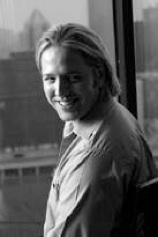
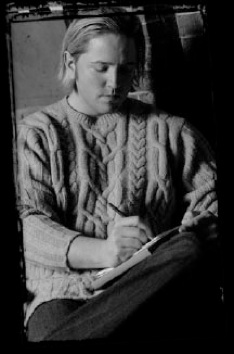
I was first introduced to Jace Vek and his music when I was asked to review his debut album, “Vision,” in 2001. To say that I liked the album would be a gross understatement - it blew me away! Still in his twenties at the time, I was really excited about finding an artist of this caliber so early in his career. We corresponded occasionally, and then he disappeared. In 2003, I received a demo of his “Live With The Royal Sylvan Orchestra,” and it also blew me away. I reviewed it, and then Jace disappeared again until earlier this year when he sent me the final version of his “Live” album. In this very candid interview, Jace explains what happened. He also talks about how he grew from a small child who could play anything he heard to the featured artist at some of the finest resorts in the country, and how severe depression almost stopped the music from playing in his head.
KP: How were you introduced to the piano?
Vek: I grew up in a very small house in a beautiful rural area of southwestern Pennsylvania. Having the Appalachian Mountains right out the window was a daily inspiration. One morning when I was about four years old, I found a piano in the garage. It just kind of appeared there, which was my mother’s way of doing things. She acquired the piano from a local church, and wanted to surprise me. I was so excited! I was an only child, and you can imagine being in the countryside with nothing much to do. The piano instantly became my best friend. My mom, a visual artist, didn’t immediately sign me up for structured piano lessons. She figured she’d get the piano and see what happened. At the time, there was a lot of classical music on television, even in cartoons. I was able to pick out melodies, and sometimes transposed them into different keys. Mom bought me some method books and had the church pianist come and spend time with me. She played by ear, so that’s how I was trained. I practiced scales, so my playing skills were sharpened with proper technique, but it was not the typical, rigid piano instruction.
Within a year, I was able to play Mozart’s “Sonata in C.” I could transpose it into the key of G or D by ear, as I was playing without music. By the time I was seven, I was starting to improvise. I would imitate Mozart’s music, and improvise it on the fly. My dad’s favorite thing was to take me to a piano store and put me on display. He’d tell me to play, and an enthusiastic crowd would gather. They say the dreams you dream when you are a child manifest themselves into what your career should be. From my youngest memories, I used to dream of being a concert pianist. I had such vivid dreams about playing and sharing music with people, and desperately wanted to make that connection. I’d be in the garage, but in my mind, I was in a concert hall. I didn’t pursue much formal education in music, but as I got older, I spent hours poring over scores of Beethoven, Mozart, and Stravinsky.
KP: You taught yourself to read music?
Vek: Yes. I bought books and studied theory and orchestration. Wherever there was something written about music, my nose was in it. I would go to sleep at night listening to Beethoven’s Ninth Symphony. I had some really comfortable headphones, so I would set the player on “repeat” and the music would play all night. I often copied scores by the classical masters, not realizing that that was a technique used to teach music composition.
When I was a sophomore in high school, I joined the Ski Club, which had Wednesday evening trips to a local mountain resort. I was skiing one evening, and saw a glow from a building down the trail. I clicked my skis off and started walking. It was a restaurant. Inside, surrounded by beautiful glass windows, was a gentleman playing the piano. Everyone was laughing and having a great time, so I was lured in. I ordered a Coke, and watched the pianist. Later, I asked if I could play a song. Wednesdays were the corporate happy hour at the resort, and people would go to mingle and talk about business. I started playing, and they went nuts! I had gotten used to people responding well when I played, but not to the point where they were throwing money at me!
KP: Were you playing original pieces?
Vek: I was playing original music and some classical, too. It wasn’t what you would expect to hear in that kind of environment, so when I gave them my 20-minute set, they went crazy. Someone got an empty pitcher, set it on the piano, and started filling it up with money! The first time I played, it was about $50, but the second time I walked out of there with about $150. By the third or fourth time, they had me doing a 45-minute set, and I was leaving with $300-400! I was supposed to be out skiing! Word got back to the person in charge of the Ski Club, who was also a musician. He heard about this kid who was playing the piano, so he walked in looking at me with this sly eye like “what the heck are you doing?” I begged him to let me keep playing, and he told me the rules were “absolutely no drinking, and stay away from the girls!” He let it continue, but my mom wasn’t aware of it. One day she opened up a shoe box in my room and found about $2500!
KP: (laughing) She must have thought you were selling drugs!
Vek: She was concerned about my being a teenager in a bar environment, but after some convincing, she let it go on. I played there for three years. When I was in my later teens, it segued into my playing at a resort that was being built in southwestern Pennsylvania called Nemacolin Woodlands. The gentleman who built it, Joseph Hardy, is a lumber magnate, and he wanted Nemacolin to be a mecca of luxury. Some of his people heard me play at Seven Springs, and asked me to play at Nemacolin. Mr. Hardy let me pick out the beautiful Steinway piano he put into this tea parlor, where I started doing afternoon concerts. I was really lucky, because no one questioned my repertoire, and that’s often an issue for pianists. I was allowed to explore my own musicality and compositional arrangements and debut them on a regular basis. This went on for years. I played there through the 2001 release of my first album, “Vision.” The formation of that album was probably the zenith of my Nemacolin years. That’s when I found my relationship with my partner and producer, Mark Wasler. He helped me create that album and also helped me realize that even though I had all of these wonderful things going on, it was time to start moving in another direction. Sometimes, when you get some early success - you start to stagnate and stop exploring.
KP: You get comfortable.
Vek: Yes, and you stop pushing to do what you should be doing, which is taking a talent to its maximum potential. That was beginning to happen at Nemacolin, but my concerts were becoming extremely popular and were often standing room only.
KP: Were you playing solo piano there?
Vek: Yes. Since the popularity was increasing, I knew it was time to make a move. I submitted a proposal that we put together a symphony orchestra to back me up for some of these concerts. We called it the Royal Sylvan Philharmonic, and it was a big success. We built it from the ground up - eighty musicians from various symphony orchestras in the area. We put a budget together and got the okay. It’s something I never would have been able to do on my own, and I’ll always be grateful to the Hardy Family for helping me make that happen.
We were planning to bring in a big recording company to capture one of these concerts live, but there was change in the air. Management turned over continuously, and it seemed like every few months, we were dealing with an entirely different philosophy. Questions were being raised about what kinds of music they should be presenting, and that started to make the hair on the back of my neck stand up. I knew that something was happening that was beyond my control, that there was some unguided force changing things in such a way that I would have to move on. At about the same time, a bomb went off in my personal life, and my marriage ended in divorce. Then my mother died from emphysema. Something was triggered in me, and I wound up in a very severe depression. I started creating walls around myself, and became very listless. I left Nemacolin on the best terms with The Hardy Family, but I was in a state of abject confusion and loss. Things got really bad for a couple of years. Up to that point in my life I had never dealt with severe loss, and I think it was probably more than my heart could take at the time.
KP: With everything crashing at once, no wonder!
Vek: Until then, my life had been lived a certain way. I played the piano at this resort - no questions asked, no problems. That security was gone. And then my home life and my mother were both gone. I say with all my heart that I think there was a moment when I thought I might be gone, too - it got that bad. I had a tremendous amount of anger, and they say that depression is anger turned inward. I wouldn’t touch a piano. All my life, I have had music in my ears. It just roars in my head. While I was going through the depression, that diminished to a point where I was almost not hearing it anymore, and that was one of the lowest moments. I knew if something didn’t change, I wasn’t going to make it. I started doing a lot of soul-searching and a lot of praying. I remember walking out onto my fire escape, looking up, and screaming “Help!” Music started playing in my head that became the theme to “The Last Sunrise.” I gave myself an ultimatum to either start living again or let this be the last sunrise. I kept clinging to that music throughout that two-year roller coaster ride. In late 2003, life took a change for the better, as it often does. I met a wonderful woman who was and is infinitely patient with my, shall we say, complexity. Things improved, and we put in about a year of post-production work on the live album.
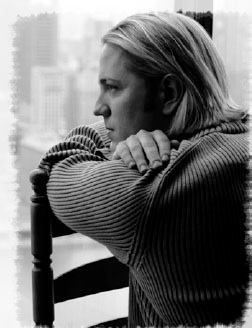
Taking some pilgrimages to Europe really helped during that time. In the Sibelius Museum in Scandinavia, there are two beautiful, massive Bosendorfer pianos, and I asked if I could play one. I gave an impromptu hour-long concert and drew a very supportive crowd. A similar thing happened in Prague. In doing things like that, I started to realize that no matter what, the music will always be there. It’s the one thing that never changes. It was a beautiful experience to be revitalized through the music.
KP: Did you start hearing the music in your head again?
Vek: Probably louder than ever before. Once the time at Nemacolin came to a close, I thought about what to do next. Since I knew how to set up concerts at fine resorts, I contacted a place in Georgia called The Cloister of Sea Island. This is one of the most magnificent places I have ever seen. It’s built where the marsh meets the ocean in southern Georgia, and is an ultra-class luxury resort with seventy-five years of legend behind it. I did an orchestral concert there that we’re talking about producing into an album.
KP: Was this recently?
Vek: Yes, it was within the year. Now they’re completely renovating the facility, with a grand opening in 2006. There is some kind of future there that we want to pursue as a guest performance artist, so we’ll see what happens when the place is finished.
KP: Did you play there just the one time?
Vek: No, I’ve had about fifteen featured artist performances over the past couple of years. Whenever there is a special event, they have me come. I love being treated to five-diamond hospitality and staying in deluxe accommodations!
KP: How did you meet Marvin Hamlisch?
Vek: Seven or eight years ago, the Pittsburgh Symphony had a competition called “A Search For A Star.” They received about a thousand submissions from singers, pianists, lounge acts, and just about anything else in the music field. I sent in a tape of me playing the “Romance” theme, which is on both albums. I was one of the ten semifinalists and was asked to audition to see who was going to be picked to perform at Heinz Hall, which is the home of the Pittsburgh Symphony. I went in for my audition and saw three shadowy figures sitting in the back of the room. I knew one of them was Marvin Hamlisch. Of course, I was the last person to audition, so I had about an hour and a half to think about it. Most of the performers were cut off after about fifteen seconds. These auditions are brutal! I was afraid I was going to get cut off after one note. The piano was a beautiful Steinway concert grand, and the acoustics in the room are such that you can hear a mouse whisper. Something came over me. I sat down at that piano and thought, “I’m in Heinz Hall playing a Steinway. No matter what happens, I’m going to enjoy this moment!” I played my heart out! I got through the whole piece, and the next thing I knew, everybody was standing in the front row, kind of stroking their chins and looking at me through squinted eyes. Marvin said, “How does Friday night sound for you?” After the performance, he talked with me on several different occasions, and told me that I definitely have a future in film scoring. It’s nice to be validated by someone at his level.
KP: What is the documentary film you just finished?
Vek: “Heroes, All” is a documentary with veterans talking about their WW2 experiences. A lot of music focuses on the spirit of brotherhood - strong emotions and ties that bind. There are a lot of very melodic cello lines, and I’m very pleased with it. I’m also working with an Emmy-award-winning director on a documentary called “Through Innocent Eyes.” It deals with young people whose lives have been destroyed by the use of antidepressant drugs. It struck a chord with me after going through my own depression. The film has a very powerful piano score. I’m also doing an orchestral score for a ballet based on “The Legend of Sleepy Hollow,” which will have some very eerie music.
KP: That should be fun!
Vek: Yes, and it’s moving my mind and my focus in different directions musically - I absolutely love that!
KP: How do you perceive the nature of music?
Vek: Music is an absolutely frightening creature. If you want to hear it, it might not come to you. If you try to ignore it, it’s in your ear. It makes its own rules. Music is a creation, an entity that makes its own rules. In my college music classes, they tried to put an academic understanding on something that tries to defy understanding. In the composition classes, the approach was, “Today I think I’ll write something in G# minor. It will be in sonata form.” It doesn’t work that way. My feeling is that the music is already written, and I’m simply opening up my ears and listening to it. When I write a piece of music, it is complete from start to finish by the time I start to write it. There is a technique called “spontaneous writing,” but this is different. This is more like listening to a CD. I don’t see myself as creating the music as much as the music is creating me. I often say that to perform music is to try to master it, but to compose music is succumbing to the idea of music mastering you. When you move in that direction, the results can be unpredictable. You find yourself waking up bolt upright at 4:00 in the morning. It can be a frightening experience because it truly sounds like there is music in the room, but it’s in your head. You have to get up and put on a pot of coffee, because this will not be denied.
KP: What was your biggest turning point?
Vek: I was staying near a small city in Finland. One night, I walked outside and looked up at the stars. I’d never seen anything like that. We have spectacular views of the night sky out in the country, but in the middle of winter in Finland, it’s about 25 degrees below zero - a brutal kind of cold. The air is so dry that it cracks. I was dressed very warmly and had a big scarf wrapped around my mouth so I could tolerate the cold air - breathing that air can be dangerous if you aren’t protected. I sat outside, staring up, and then the northern lights began. It was one of those times in life when you ask those heavy questions: why am I here? what is the nature of the universe? You let your mind run. I was looking up, thinking about these things, and started to hear a string line that was very, very dissonant. The Thadet Variations begins with a piano introduction, and then the strings start to come in real low on cello and bass. I heard that for about ten minutes. I was rocking back and forth in this chair, and then the music started to expand. Pretty soon, there was twelve-part string harmony taking place. Then the piano started to come in. This is an example of how the music is already written - you’re just tuning in and listening. This magnificent piece of music was given to me, and if I ever had any doubt at all about what I was doing or whether or not I should be doing it, it ceased right then. At that moment, I said, “Dear God, I understand. Whatever happens to me, I will ride the storm and do what I have to do. In times of need and times of plenty, I will hold true to this, and I will always listen.”
KP: What kind of collaboration project are you working on with David Nevue?
Vek: We’ve become really good friends, and I wanted to surprise him with an orchestration of “The Vigil.” I captured the piano track and built the orchestration around it. He flipped when he heard it and suggested doing an album! He sent me all of his CDs, and I’m going through them. There’s so much beautiful material there, so it’s hard to choose one piece over another. It’s something that’s going to take awhile, but we’re going to work on it and see what happens.
KP: You don’t really have a timeline for it?
Vek: No, and the only reason is because I have a performance with the Pittsburgh Civic Orchestra in October. They’re doing a celebration of great American composers. I don’t know if I’m a great American composer, but I managed to get in there! I also have the ballet and the documentary I’m working on, and everything is kind of hitting at once. I’m trying to give it all equal billing.
KP: Are you planning to do more Whisperings concerts?
Vek: I’ll do as many as David will let me! It was such a wonderful experience, and all of the artists in York, Pennsylvania were fantastic. The beautiful part is that the Whisperings community understands that this is a work in progress. David Nevue is a real doer. Whisperings is something that can only benefit the solo artists who are trying to get their music out in front of audiences.
KP: Another great thing is that artists are talking to each other and helping each other with various aspects of the business. When I first started doing interviews, it seemed like nobody knew each other - everyone seemed to feel like they were on their own planets.
Vek: More than that, people had defensive perimeters around themselves. There is always going to be a spirit of competition between people who are trying to make it, but I think artists are realizing now that we are often stronger together than we are individually. There’s an energy that builds when five people push a concert, and artists are beginning to take the mentality of sharing this audience. The Whisperings concept has probably done more for the solo piano community than even David realizes. Just like your website. Your website has done absolute wonders for the community - and Whisperings is an extension of that kind of mentality.
KP: Who and what do you consider to be the biggest influences on your music?
Vek: I am an absolute Beethoven fanatic. I would like to believe that when I leave this world, the first thing I’ll see is him looking at me. I’d like to be able to go back in time and see just one performance by him. When I was younger, I’d listen to one composer’s music and become totally immersed in it. That happened with Mozart, then Beethoven took over. Then I went to Chopin, then Rachmaninoff, and my music would start to be influenced by those composers’ music. I was never really influenced by any of the contemporary composers.
I think one of the things that a lot of solo pianists miss out on is pursuing other styles of music - like Chopin, Beethoven and some of the other masters. It teaches you to think differently about the way you write your own music. It also teaches you technique that you otherwise wouldn’t have. Then you take that technique when you’re working on your own music, and suddenly you’re coming up with counterpoint - something that is often lacking in a lot of the offerings out there. If you listen to the music of Michael Dulin, it’s right there.
KP: That was one of the first things I noticed on your “Vision” album. I thought, “This guy is really well-trained and experienced.” When I started seeing on your site that you were mostly self-taught, I thought, “How can this be?”
Vek: I often pull out the Hanon book and set the metronome up. It’s not that a metronome forces you to keep time as much as it does not allow you to have the pleasure of having moments to think between passages. You just have to do it. The only way to speed up the process of your hands knowing where to go without having to be told is to force that to grow. That’s what got me to where I am now.
KP: Your technique didn’t come out of thin air. It never does.
Vek: That is an ability that was earned through work.
KP: If you could have any three wishes, what would they be?
Vek: A Bosendorfer piano. I want to write a song for those three black keys down at the bottom. I would like to be able to perform in strange places. I’d like to be able to bring a vehicle into a village, back a piano out of it, and perform. My manager and I have talked about how neat it would be to do unpredictable concerts in unique places, and share the music with everyone who has ears. That would be a wonderful thing to do. And I think my third wish is just to have a wonderful family, and to be able to provide based solely on my artistic merits and pursuits - to be a good father and a good husband.
Many thanks to Jace Vek for sharing his story. For more information about Jace and his music, visit
his website and his
Artist Page here on MainlyPiano.com.
Kathy Parsons
May 2005