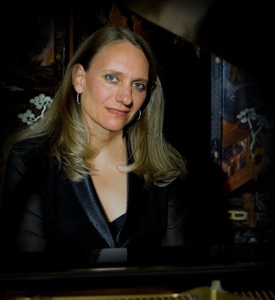
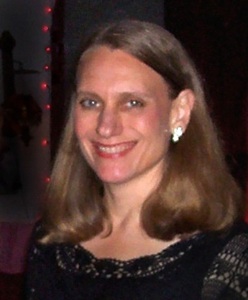
Rebecca Oswald is a pianist/composer who currently resides in Eugene, Oregon. She and Joe Bongiorno will be performing at my house on May 3, 2009, and I can’t wait to meet Rebecca after corresponding and working with her for several years. Rebecca composes for a variety of instruments as well as chamber groups and orchestras, for choir and voice, and her music has been performed all over the world. I think you’ll enjoy getting to know Rebecca and her music as much as I have.
KP: I am the most familiar with your piano work, but piano is only one small facet of your musical life. When did you start playing music as a child?
RO: I began playing piano duets with my dad when I was four, and started piano lessons at age six.
KP: How many instruments do you play?
RO: My professional-level instruments are piano and voice. I tinker around with guitar, viola, mandolin, recorders, and percussion, mostly for fun.
KP: Do you often sing your own work or do you mostly write for other vocalists?
RO: I have written art songs and choral works, as well as popular songs for others to sing. I don’t have a pop music voice: I can’t belt, croon, growl, or improvise popular-style melismas. My voice is more suited to classical choral repertoire, art songs, and some kinds of folk music. Since January, I’ve been the soprano section leader at St. Mary’s Episcopal Church in Eugene, where we frequently sing sacred classical and early music repertoire in a variety of languages. I love working with languages other than English, both as a singer and as a composer.
KP: Has music always been the driving force of your life?
RO: Yes, always.
KP: Do you come from a musical family?
RO: Yes. When I was a kid, my parents sang in the church choir and my dad sang in a barbershop quartet. My dad played piano by ear, but he was primarily a percussionist. Three of my grandparents played piano; my mom’s mom was a concert pianist and piano teacher. Three of my great-grandparents played too.
KP: Did you grow up in Oregon?
RO: I was born in Oklahoma City. I lived there nearly nine years, then six years in Denver. In my teens, my family moved to northwest Houston. I came to Eugene in 1998.
KP: Where did you go to college?
RO: In 1998 I earned my BMus summa cum laude from Westminster Choir College of Rider University in Princeton, New Jersey. I majored in music theory and composition, my principal instrument was piano, and I minored in voice. In 2001, I completed my MM at the University of Oregon School of Music, where I majored in composition.
KP: Do you teach?
RO: No. Teaching is not my passion, and I don’t look for students. A few have found me, studied for a season, then gone off to do their thing.
KP: I find it fascinating that you are Music Director for The Tango Center in Eugene. What does that involve?
RO: I play for the dancers there a few times a month. Sometimes I play solo; occasionally I’ll put together a duo, trio, or quartet. I write out the charts rather than have a jam session. I started playing tango piano three years ago. I had been dancing tango for about a year at that time, getting it in my body. It is fun to play both golden age Argentine tango and modern “alternative” tango music for dancers. Dancers love having good live music to dance to! I've recorded one of my alternative tango arrangements, “Claro de Luna,” and it's available on iTunes.
KP: You are the fastest and most accurate sheet music transcriber I’ve worked with. Is transcription something you enjoy?
RO: Wow, thank you! Well, I’ve always had good ears and an ability to translate what I hear onto paper. I also have a good eye for how professionally published music should look on the page. Since 1980 I’ve transcribed countless songs for various purposes. I’ve been using Finale notation software since 1994. I started doing piano transcriptions for WSPR {Whisperings Solo Piano Radio} pianists last summer, after telling David Nevue that I was looking for extra work and that I was capable and qualified to transcribe. He suggested I publicize my availability to the WSPR list. Since then I’ve gradually built up a base of satisfied customers. Transcription is not as much fun as creative pursuits, but it allows me to work at home in music, for which I’m happy and grateful. It has also opened the door to many new friendships and professional alliances, and that’s been wonderful.
KP: What are some of your other musical pursuits?
RO: On the side, I occasionally do production or orchestration work. In 2003, I orchestrated an independent feature film (“Westender”). The composer gave me his MIDI files and I turned them into score and parts for the orchestral recording session. I’ve also done a fair amount of audio editing and studio production, not just for my own projects, but for other musicians as well. At home I use Cubase, and elsewhere I’ve worked with ProTools and Sonar. In the past few years, in addition to my own CD, I edited and produced two CDs (“Choros” and “Something Real”) for guitarist Craig Einhorn. I started doing studio production in the ’80s, back in the days of sixteen-track, two-inch tape and analog recording.
KP: You have also written music for two CD-ROM strategy games. What were they and how was that to work on?
RO: Writing game music was great fun! Of the two games I wrote music for, the first was in 1997, when I was an undergrad, the other in 1998 just as I was starting grad school. The games are in Mandarin. Their titles translate as “Heroes in the Time of the Three Kingdoms (I and II).” One of my best friends at Westminster was from Taiwan, and her brother was starting a game company over there. She asked if I would be willing to supply music for their first game. I had never played videogames, but I said an enthusiastic “Yes!” knowing I’d figure out how to do it later (my modus operandi, apparently). I already had extensive experience with MIDI and sequence programming, and I had a multitimbral synthesizer. I chose a palette of sounds and began creating loopable one-minute mini-songs by ear using MasterTracks Pro, a computer sequencing program. I didn’t actually write down any notes. I produced and recorded the tracks (17 per game), and mailed the audio files on DAT to Taiwan. The two games are set in second-century China at the fall of the Han dynasty, so the music had to sound Chinese, ancient, and totally cool. The company (Odin Soft) had sent me example music tracks from the best games at that time, and they told me exactly what they needed (hero themes, battle music, contemplative themes, etc.). My personal goal was to send them music that sounded better than their examples, which I did. They were very satisfied and asked me to create music for their second game, too. Both games sold well in Taiwan. The two games are now retired, but Odin Soft is a multi-million dollar success story. My music tracks sound dated today because of the early 1990s synthesizer I used, though the music itself is good. I’ll rerecord and remix it someday.
KP: You have also composed a body of choral work. Is it mostly sacred or secular?
RO: I enjoy writing both sacred and secular choral works. When I look for sacred texts, or write them myself, they lean toward inclusivity, kindness, and ecumenical ideals. I don’t limit myself to my own religious background when I look for meaningful texts. My favorite choral work in my catalogue is called “Reciprocity.” The text is eleven quotes articulating the ethic of reciprocity from the world’s religious and philosophical writings, going back over 5000 years. The ethic of reciprocity has evolved over the course of millennia to become a guiding principle of most faiths today. Its flexibility and universality allow human beings of varying but overlapping moral codes the possibility of treating each other with mutual respect, understanding, and, potentially, love. “Reciprocity” honors both the positive (“Do to others as you want others to do to you”) and negative (“Do not do to others as you would not want others to do to you”) formulations of these similar teachings by quoting eleven of our planet’s history-shaping religious teachers and philosophers in their native languages, as much as possible. I researched the ethic of reciprocity, selected quotes from a wide range of religions and philosophies, then located these quotes in sacred books, first in English, then in their original languages, none of which are western or are written with Roman letters. Then I sought out and recorded linguists declaiming the texts as if they were teaching it to followers. I transcribed these recordings into IPA (the International Phonetic Alphabet), made a Roman transliteration, and set them to music as an eleven-minute SATB choral work. I ordered the quotes chronologically as the teachings appeared in the world’s sacred texts, so the musical work itself reflects the religious/philosophical unfolding of this concept throughout history. The choral setting of each quote pays homage to the homeland of its teacher by incorporating archetypal characteristics such as rhythms, scales, and harmonies still found in the ethnic music of those cultures. I loved doing the research for this work. When I look for or write texts, whether sacred or secular, the words have to have meaning for me. I ask myself: when people perform or hear this text, will truth, beauty, goodness, peace, love, and joy increase in the world? If not, I’d rather not write such a text or set it to music. Once I write or find a text to set to music, my intention is to write meaningful music which will augment the meaning of the words.
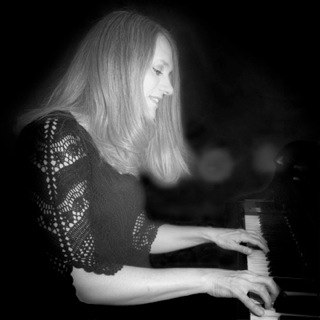
Whether I’m writing sacred or secular music, when everything about a piece rings true, when all the elements are balanced and fit with each other, it’s awesome! There is nothing else like it.
KP: Tell us about “Man Of Oregon.”
RO: “Man Of Oregon” is a symphonic biography of Bill Bowerman (1911–1999), the University of Oregon and U.S. Olympics track coach who co-founded NIKE and brought jogging to America. It’s a 23-minute single-movement work with four smoothly connected sections, each representing a geographic location in Bill’s life, all in Oregon. It gives a rough chronology of Bill’s life story, expressing his personality through music that is both thoughtful and accessible. The work is mostly original, but I do quote a couple of folk songs Bill loved, as well as the UO Alma Mater and “Mighty Oregon” (the UO fight song). Bill passed away in 1999. To get to know him in his absence, I did a great deal of research. I interviewed many of his family members, friends, and coworkers. I also visited the places he lived and worked, and I spent a lot of time soaking up the vibe at Hayward Field, the UO track where he spent many years coaching. There are two versions of this symphonic biography: one for chamber orchestra, one for full orchestra. The chamber version (called “Bowerman, Man of Oregon”) was premiered in fall 2007 by the Central Oregon Symphony. “Man Of Oregon” was premiered in summer 2008 by the Oregon Bach Festival Orchestra. Both performances rank among the most amazing days in my life.
KP: How long have you been a Whisperings Artist?
RO: Three years in April.
KP: Have you performed at many Whisperings concerts?
RO: Two, so far. I hope to do many more!
KP: Who and what are some of your musical influences?
RO: That is a long list! My classical piano studies influence my piano writing in terms of formal structure, voice leading, shaping of phrases, development of material, meaningful inflection of motives, that sort of thing. For piano and more, my influences include Beethoven, Mendelssohn, Schubert, Schumann, Brahms, Chopin, Debussy, Satie, Fauré, Rachmaninoff, Prokofiev, Stravinsky, Mahler, Vaughan Williams, Verdi, Puccini, Bizet, Weill, DeFalla, Britten, Ibert, Poulenc, Milhaud, Ginastera, Tormis, Golijov, as well as early composers such as Tallis, Bach, Monteverdi, Gabrieli. I also like a lot of contemporary film music composers.
KP: Do you have a favorite musical genre to write for? To play?
RO: No and no. I thrive on variety. I am curious about and fascinated by so many things: sound, harmony, timbre, language....
KP: Your wonderful solo piano CD “October Wind” was released in 2005. Do you have plans to release another piano recording?
RO: I have no plans to do so at this time. We’ll see, maybe later this year; I like that idea!
KP: You did the cover artwork for “October Wind.” Do you do much painting?
RO: Not anymore. I was an art major for three years in the late 1970s, and I made the “October Wind” painting in the early 1980s. These days my main hobbies are vegetable and herb gardening, dancing tango, riding my bicycle, and having great conversations with my many wonderful friends. I doodle with watercolors sometimes.
KP: Who are some of your favorite musical artists?
RO: I don’t listen to music very often, other than what’s constantly going on in my head. My popular music roots trace back to rock: the Beatles, Pink Floyd, Peter Gabriel, Dream Theatre. These days I am enjoying music from many cultures: Astor Piazzolla, Gotan Project, Sevara Nazarkhan, Miguel di Genova, Snatam Kaur Khalsa, Bailongo, Trilogy, Candan Ercetin, Antonio Carlos Jobim, the Gipsy Kings, Phoebe Legere, Angelique Kidjo, Souad Massi, to name a few.
KP: Do you perform in concert often?
RO: No. I play tango music for dancers fairly often, but that’s not the same. I would like to concertize more.
KP: Your musical works have been performed all over the US and in quite a few foreign countries as well. Do you travel to these performances? It must really be a thrill to know your music is being heard all over the world!
RO: I travel to performances when I can afford to or when my travel is sponsored. It’s especially gratifying to be at a premiere performance. It’s even better to attend both a rehearsal and performance. Hearing a work performed or rehearsed for the first time brings one’s musical imaginings to life, to reality. When composing for more forces than I can play or sing, I have to be very careful about every detail so that the score and parts accurately represent my intentions. When a performance goes well, there is nothing else like it! Yes, it is thrilling.
KP: Is your orchestral music and choral work melodic and calming or is it more experimental, or a combination?
RO: My choral work is voice-friendly. It stretches beyond common-practice tonal harmony, but it’s certainly accessible to both singer and listener. As for my instrumental writing, I have a few experimental pieces, but they are still very listenable. Sometimes I push the tonal envelope a bit, but always for a good reason: to enhance a piece’s meaning or to make a point. Dissonance is a tool for the toolbox, a spice for the spice rack. Controlling dissonance is knowing how, when, and how much of it to use to create an effect. In the context of rhythm and timbre, dissonance can express things like darkness, edge, crunch, energy, biting humor, intensity, otherworldliness, uncertainty, quirkiness, playfulness. Sometimes that’s what a piece or a movement wants. When a musical work develops momentum, sometimes it’s best to just get out of the way and see where it goes. Human ears are evolving. Some composers are way out on the edge pushing the envelope. I’m neither at the tonal center, nor out on the edge, but somewhere in between. I want performers and audiences to like my music and to want to hear it again.
KP: What has been your favorite commissioned work?
RO: I can’t choose! Some commissions have been more challenging than others to write, but each has been a unique experience. I love doing research, gathering the details and/or putting myself in the mindspace to write a new piece, whether the research is formal and academic or informal and imaginative. Some of my commissions have involved unusual research or preparations. I was once asked to write a birthday song for a set of twins who were turning one year old. Rather than write a song that would only appeal to their parents, I set out to write, record, and produce a song that the twins themselves would like. The lyrics include their names. When they recognized their names being sung, their faces lit up and they started doing a baby dance! Another commission was to write a six-movement chamber work for horn, oboe, percussion, and piano, with narration spoken by the instrumentalists between movements, retelling the story of Theseus and the Minotaur in the labyrinth. In addition to studying numerous versions of the story, I also did a little time travel, visiting ancient Greece in my imagination. That was fun. I’ve also written several works on nature themes, and for these I assigned myself generous outdoor observation time for authenticity. That was fun too. One of my favorite choral commissions was for triple chorus: two adult choirs and a children’s choir, plus four winds and percussion. I was asked to incorporate several U.S. and Estonian folk songs into a single musical celebration of human freedom and dignity. I reveled in the linguistic research; some of the words in these old Estonian folk songs were no longer in common use. It required some serious sleuthing to track down a few obscure words’ meanings, but I eventually prevailed. Another unusual commission was to write two pieces for prepared classical guitars (a duo piece and a quartet piece). I took a classical guitar and attached all manner of items and materials to the strings in various locations; I experimented, listened, sampled, logged the setups, and gradually created the two works, notating them in tablature because the setups often produced bizarre tuning alterations. I polished up my rough audio sample tracks of the quartet piece in Cubase, mixed and produced it, and it’s now available on iTunes. It’s called “Tin Roof,” and it’s rather amazing: you can’t even tell what the instruments are! It’s a fun piece, and I hope all your readers will check it out.
KP: What are you currently working on?
RO: I’m just wrapping up a commissioned Alma Mater for Linn-Benton Community College in Albany, Oregon.
Many thanks to Rebecca for taking the time to tell us about her life and music! You can learn more about her and hear samples of her music at
her website. Reviews of her albums and songbooks are on her
Artist Page here on MainlyPiano.com.
Kathy Parsons
March 2009