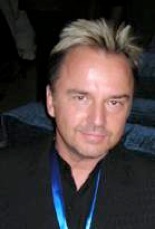
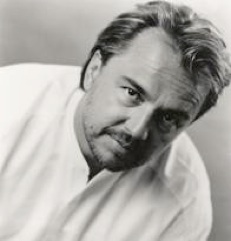
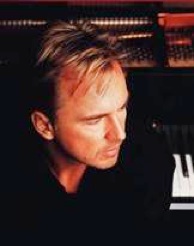
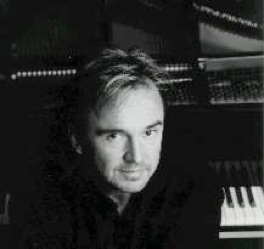
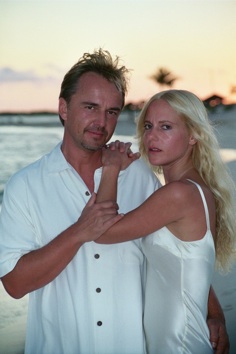
Peter Kater is one of the most respected artists in the contemporary instrumental field. Born in Munich, Germany, he and his parents relocated to New Jersey when he was a young boy. An incredibly prolific composer, Peter has lost count of how many albums he has released. “I think it’s over forty. I stopped counting after thirty-something - kind of like a birthday thing.” He recently released a four-CD set on the Real Music label called “The Elements Series, “ which is some of his most beautiful work to date. The individual CDs are titled “Water,” “Earth,” “Air,” and “Fire.” Peter has been nominated twice for Grammy Awards for his Native American “Red Moon” (2003) and his most recent solo piano album simply titled “Piano” (2004). Peter and I have been trying to get it together to do an interview for about five years, and we finally succeeded in early January. I think you’ll enjoy getting to know him as much as I have!
KP: When did you start piano lessons?
Kater: I was seven. It was my mother’s idea - she thought I should play the piano, but when I started taking it seriously, she panicked! She just wanted me to play at parties.
KP: How many teachers did you have?
Kater: I went through three teachers my first year. They all stopped teaching me because I was so difficult and rebellious. I stayed with a couple of classical teachers for awhile, but when I was twelve, my mother found a teacher who taught me to improvise and play the kind of music I was interested in. That’s when things kind of opened up for me. Classical music was so rigid that there was no room for myself. This teacher taught me to be myself.
KP: Improvising wasn’t something you started doing on your own?
Kater: Not between the ages of seven and twelve. My teacher taught me about basic chord structure. In classical music, you learn scales, but you don’t learn as much about improvising around chord structures or how to read a lead sheet with just the melody and chords - how to take that and interpret it into any number of styles and any amount of complexity. It was really cool to discover that I could take a simple melody with the chords and play it in a lot of different ways. It was really fun and opened up the ability to play pop and rock music. That led to hearing Keith Jarrett, and my whole world stopped.
KP: When was that?
Kater: I was eighteen. I started listening to Jarrett, The Paul Winter Consort, and the group, Oregon at about the same time that I was introducing other elements into my life. It was really a big opening on a lot of levels. I found that music could be used to convey deeper, more complex feelings that weren’t as easily expressed in any other way, and that there was such a thing as instrumental music that has a really strong message to it.
KP: That really was a major revelation because all of the music on the radio was pop vocals, classical, or jazz. When they started playing instrumental music, a whole new world opened up. Of course, that got pretty well shot down when the better labels were eaten up by corporations and the radio stations started becoming more homogenized again.
Kater: It’s pretty much toast right now. In the mid-late ‘80’s, they were playing some great music, stuff that was new and interesting - and they were playing a ton of my music. That went right down the tubes to this rigidly-structured smooth jazz format. Granted, some of those songs are great, but it’s just not what it could have been. I like a lot of smooth jazz, but there’s also a lot of generic stuff. That’s what led to radio airplay not translating to sales. It became so generic and homogenized that you couldn’t tell one sax player from another, and all the keyboard players started sounding alike. People have been tuning in to smooth jazz on the radio. They don’t have to really listen to it and they don’t care who the artists are. The result is no record sales from that genre.
KP: Are you still doing a lot of soundtrack work?
Kater: I haven’t done as much of that. I’d love to do a juicy feature film, but it’s hard to get into that market. I just finished the soundtrack for a film called “Ten Questions for the Dalai Lama.” It’s a really nice kind of docu-film with some great footage of Tibet, China, and India. It was shot in a high-resolution wide-screen format, so it’s just gorgeous. It has some really cool ritual stuff both from Tibet and India where they’re walking over hot coals and eating coals, lots of holy men, and great exotic footage. The music is quiet and introverted, and makes the footage of the sikhs and the holy men in India look trippy. It’s very cool. They’re hoping for a major release later this year.
KP: What made you decide to sign with Real Music?
Kater: I’ve been with different labels throughout my career. I’ve also started a couple of my own small labels. Real Music seemed to be a good fit for “The Elements Series.” It seemed to be their genre and their market.
KP: Are you going to stay with Real Music, or was that just for The Elements Series?
Kater: Right now, it’s just for The Elements Series. I wouldn’t write off the possibility of doing something with them in the future, but I don’t have any plans for that.
KP: What was the inspiration to do The Elements Series?
Kater: I tend to bounce around from project to project. It’s kind of predictable in the sense that if I just finished a more upbeat record, I’ll usually do a more mellow record next. I keep going through a cycle of doing what feels good to me. I liked the idea of doing a series because it’s just as easy to market a four-record series as it is to market one CD. I, knock on wood, have a steady stream of inspiration to where I can do four records at a time and not feel too overwhelmed or like I’m spreading myself too thin. I like the idea of music that’s pretty-much geared toward relaxation, but that’s not lame or mindless or just kind of a wash of glunk, if you know what I mean. I like to think that The Elements Series has some real substance to it and that even though it’s mellow and Real Music is marketing it a lot to spas, healing centers, and therapists of different kinds, I feel the music can have an impact on someone’s life.
KP: I felt it was music that you could leave in the background or you could really focus on, and it works very well both ways.
Kater: I like that genre, but I can’t really listen to any music in the background.
KP: I can’t either.
Kater: It’s just too distracting for me. If I can leave it in the background, I’d just as soon have it off. What I did with The Elements Series or really any record that I’ve worked on, is listen to it at night when I’m just kind of chillin’ out. I would listen to it and sculpt it to that place where it’s - “yeah!” If you’re really listening to it, it works, and you can also have it on even if you’re not going to focus on it 100%. I always focus on it 100%.
KP: When I’m reviewing CDs, I do a lot of the listening in the car, and when I realize that I’m not hearing the music anymore, I know something is wrong. With The Elements Series, I was totally involved in the music all the time - especially “Water.” I love that. Did you work on the music specifically for each CD, or did you take from a whole body of recordings and say, “That goes more with ‘Water’ and that with ‘Fire’”?
Kater: I worked on each CD individually. I got feedback that the “Fire” CD is more like glowing embers than an actual burn.
KP: It is. It’s very peaceful.
Kater: That the kind of quality I wanted. Who wants a forest fire?
KP: What kinds of projects are you working on now?
Kater: I just finished the soundtrack CD. I’m also working on a couple of Native American projects. I just finished producing a record with Bill Miller, who won the Grammy Award last year for the best Native album. It’s a really sweet CD. Then I’m going to do a Native project for Silver Wave.
KP: What got you into collaborating with Native American artists?
Kater: That began with my work with R. Carlos Nakai. Back in about ‘87, I was shopping in a Southwest kind of store. I had never heard of Carlos, but I bought one of his cassettes to give a friend as a birthday present. He liked the cassette so much that he sent me a copy. I started playing along with it on the piano, and then I called up R. Carlos and said, “Hey, I think this sounds really cool. Do you want to try something?” He was up for it, and that led to the work I’ve done with him.
KP: You’ve done quite a few albums with him.
Kater: We did five or six, plus the two-part soundtrack for “How the West Was Lost,” the Discovery Channel’s series. That led to doing a record with Joanne Shenandoah, who is a Grammy-nominated Native singer. Then I did the “Red Moon” album, which had a lot of guest artists on it. That was my first Grammy nomination. It’s interesting working with another culture. There is something going on in Native American music that is specific to their history, and I find it interesting.
KP: It’s fascinating to take the piano, which is not a Native American instrument, and make it work - especially with so much improvisation.
Kater: The artists bring to it what they bring to it. It’s a very specific style, and its limitations are what create its uniqueness. The Native American flute can only play a pentatonic scale unless you’re going to half-hole some of the notes. Why do that? You don’t want it to sound like a recorder. You want it to have the specific sound that brings out the mystical moodiness.
KP: You must have been listening to Paul McCandless for a long time before you started working with him. How did that happen?
Kater: Paul McCandless, David Darling, and Ralph Towner {members of the group, Oregon} made a big impression on me. I met cellist David Darling at a John Denver conference. He and Paul were both musical gods to me. I’d been listening to their music for years - it would take me places. When David agreed to play on some of my CDs, I thought it was way cool. I also thought that since David was willing to work with me, maybe Paul would, too, so I contacted him. It’s really true that the better an artist is, the easier he or she is to work with. There is less ego involved. Difficult artists have major insecurities, so working with people like David and Paul is a total treat! They’re great people, really supportive, and are not out to prove anything. I like to work with Paul as much as I can. It’s an honor, and it’s fun. He doesn’t mind playing the really mellow, new agey stuff, and he’s obviously really skilled at the more complex, upbeat stuff.
KP: You’re one of the most prolific composers around. Do you always have music going on in your head or are you able to shut it off?
Kater: Tapping into the music thing is one of the areas where I struggle the least in my life. I have a profound sense of trust that it will be there when I need it, and when it’s not, I usually don’t sweat it. If it’s not there, I go for a bike ride or do something else and come back later. I have this philosophy that being creative doesn’t exist. You have to be open and receptive. Creativity is the nature of the universe, and it exists always. It is why we exist - period. It’s not for us to try to be creative; it’s for us to try to perceive it and experience it. I’ve actually taught a couple of workshops on this concept, and people sometimes get annoyed at first because I go in with absolutely nothing. That’s my whole approach. There shouldn’t be a trick to the unfolding of a song or a record. It’s really a matter of letting it happen and being available to the process. It’s a hard thing to teach.
KP: People get so caught up in the busy-ness of life that they don’t allow it to happen.
Kater: Yeah. That’s not to say that I don’t feel stupid sometimes, just sitting there thinking, “Am I doing anything worthwhile?” I guess I go through those times where I judge myself and feel less than talented, but, for the most part, I really like being engaged in the “what’s next?” kind of approach. I don’t need to know the whole thing - I just need to know what the next step is. If I only have one idea when I start a record, that’s where I’ll begin. Once I’ve done that, inevitably, there will be another idea and then another and another - which instrument to use, what melody to write, production ideas. It kind of leads itself - like I’m following bread crumbs.
KP: It’s not something that’s at all fearful or causes anxiety?.
Kater: I get stressed sometimes if I’m on a deadline where I need to do something that feels like it might be bigger than I have time for. Usually, working relieves stress for me. If I’m doing a concert, I don’t get stressed from playing.
KP: You don’t get performance nerves?
Kater: I do, but I just kind of hang with it. There are certain gigs where I can’t wait for them to be over, but those are usually because I’m in the sort of situation that I don’t like. I travel around the country and play at a lot of New Thought churches. I play a few of my songs per service as the inspirational music, and then I sell CDs. Every now and then I’ll play in a church that has an electric keyboard. I hate the sound of electric keyboards. I dread every note because I know I can’t communicate what I want to communicate on a keyboard. Sometimes I’m in a situation where I feel like I don’t quite fit in - I might be playing where people are expecting something else. Then I have a hard time focusing because I’m thinking that they aren’t there to hear me - they’d rather have some high-speed bebop jazz player or something. When I’m working on my own, doing my concerts, or in my studio, I usually feel pretty good.
KP: When you do concerts, how much improvising do you usually do?
Kater: I wing it. I improvise as much as I feel comfortable, as much as I feel like it’s working. I also improvise around the songs that I’ve already written and always do one or two pieces that are totally improvised.
KP: That fascinates me. All the years I took lessons, improvising was forbidden, and I really resent that! Improvising duets is even more mysterious. I can relate to being able to do it by yourself, but with another person - especially if it’s someone you’ve never met before -it’s magic.
Kater: That’s kind of how it was with Carlos and me - we could just play. We did whole records just playing, and that was some weird energetic thing. It’s kind of that way with Paul, too. I think it’s easier to improvise with someone else. There is more give and take, and there is more to play off of. You don’t feel like you’re in your own little world as much. You feel like you’re communicating with somebody, and there are two sets of inspired lines happening rather than just one. Of course, sometimes you’re just not connected and you end up playing all over each other.
KP: Everyone has a little different approach to creativity, and I think it’s important to share those ideas.
Kater: Well, I’ve kind of evolved to this, you know? It used to be that before I did a concert, I’d fast for three days and meditate. I was kind of extreme in that area. Actually, in my early twenties, I would fast a lot and do extreme retreatish kind of stuff. Then I asked myself why I wanted it to be a prerequisite that I had to fast for three days in order to play well. That’s pretty serious, so I decided that I needed to go in the other direction so that it’s as easy to go to the piano and be creative as it is to go to the bathroom and wash my face. I didn’t want there to be a distinction between what is sacred or spiritual and what is not. It’s all part of the same thing. I even take it a step further, and I might be pushing it a little bit, but I don’t like separating the dark from the light. You can’t grow seeds without the dark earth covering them up. Life doesn’t exist without all of the stuff that we fear and try to run from all the time. A lot of people in this New Thought movement are light chasers. They’re always running from this and that and toward something else. I don’t think that’s as whole as it should be.
KP: What kinds of things do you like to do when you’re not doing music?
Kater: I try to stay away from crowds. I like it when people are at work and I can go do my thing without crowds. My wife, Gabrielle, and I like to walk on the beach. We just had a baby a year ago, so our bike riding hasn’t been happening too much. We like to eat healthy and spend a lot of time researching the latest kinds of health food, diets, and cleansing things, as well as what to eat or not eat. We're pretty much on a sugar-free, wheat-free, dairy-free diet and like to cook food that tastes really good but has zero allergens. It’s like a hobby, but a really good one. I like nature. We live in an area that’s about as close to nature as you can be between LA and San Diego. We’re about ten minutes from the beach.
KP: Tell a little bit about the six-year period in Colorado when you only played improvisationally.
Kater: That was the period that was inspired by listening to Keith Jarrett, Paul Winter, Oregon, and those guys. I thought it was too easy to fall back on music that you know, and that the most direct way to be forced into unknown areas is to not allow yourself to go into your normal comfort zones. Even when you’re improvising you can play it safe, but if you’re doing it live for three or four hours a night, you’re going to lose your audience or get fired if you keep playing the same thing over and over. So, I put myself in the position of having to come up with new stuff, new energy, and to try new things - to make mistakes and learn from them or even to repeat them to get into that space of improvising. It was very important to me to be spontaneous not only in my musical work, but in my daily life. I was free and single at the time and lived in a number of places or nowhere at all. I was very much a Bohemian-type kid who felt that he missed out on something by not being old enough to be a part of the 60’s and 70’s. I tried to make up for it in my own way.
KP: What kinds of places did you play?
Kater: At the time, I lived mostly in Boulder, and there were actually a whole bunch of places to play. One was called the Hotel Boulderado Mezzanine - the hotel is still there. They had an upstairs lounge with a piano, and I’d sit and improvise three or four hours a night, two-six nights a week. There was a place in the Boulder mall called The Heartland Cafe that served health food. They had a piano, so I’d play for a bunch of old hippies that hung out there. There were at least a half dozen places between Boulder and Denver where I could go and play and make a decent living doing it. You can’t do that anymore.
KP: Your first album was solo piano in 1983. So-called new age music was just getting started then. How did you market your recordings?
Kater: There was sort of a grass roots distribution network happening. Most notably was Backroads Distribution which still exists and is up in your area now. Mannheim Steamroller was very popular at that time, and they bordered on new age instrumental music. Windham Hill was starting up. It was all happening at the same time, and there were places to get the recordings out there. Radio stations began popping up that were playing that music. In some sense, it was easier then than it is now. There were not that many of us doing it, and it was new. When anything is new, people are much more receptive to it. Now, you release a solo piano album, and it’s like, “Oh wow...” How many solo piano albums have been released the past year?
KP: A lot!
Kater: I think about that every time I consider doing a solo piano album. There are so many of them out there.
KP: Yeah, but yours rise above. The last one that you did, “Piano,” was so good!
Kater: Thanks.
KP: You were eighteen when you started improvising. Did you start composing at about the same time?
Kater: The composing thing really started happening around the time that some of my improvisation was beginning to solidify into songs, so it was about five years later.
KP: What was the environmental leadership award that you received in 1995?
Kater: I’ve always been really inspired by nature and always talked a lot about the environment. I spend a lot of time in nature and have always been very clear that the purity of the environment is directly connected to our health as a civilization. There was never any doubt in my mind that you can’t have one without the other. All this “save the earth” stuff really annoyed me because you’re not adopting a pet. The planet would do quite fine without us screwing with its natural balance and integrity, thank you. I always talked about it at my concerts and wrote about it in my liner notes. The UN noticed me doing that, and one year I did about ninety benefit concerts that were in conjunction with the United Nations Environment Program and the United Nations Council of the Arts. As a result, they acknowledged me with that award.
KP: Who or what are some of your musical influences?
Kater: You can’t help but be influenced by the people you listened to in your teens. As a teenager, I loved all those pop/rock/folk artists like Cat Stevens, Elton John, early Billy Joel, James Taylor, Carole King, Jethro Tull, Led Zeppelin, The Moody Blues, all those people. That’s a big influence on anyone. To this day, I find myself writing stuff that was directly inspired by something from an old favorite album. I know I probably sound like an old fogy harkening back to songs that came out thirty and forty years ago, but it was really good music and it shaped how I wanted to express myself as an artist. Over the past ten or fifteen years, I’ve been a major Sting fan. I was into a lot of Peter Gabriel’s stuff, and am still a big Oregon fan. I like a lot of things I hear on the radio, and I watch VH-1 and MTV, but since I work so much in music, I don’t listen to it all the time.
KP: Do you play any instruments besides piano and keyboard?
Kater: I play a little native flute and can do some percussion, but that’s about it.
KP: Do you have a favorite of your albums?
Kater: I’m usually really into what I’m working on at the time. I’m really proud of The Elements Series and think that was really a good thing. I’m proud of the “Piano” album and my other recent work. If I go back to the older stuff, some records stick out more than others. I think “Two of Hearts” is really good, and the “Migration” album with R. Carlos Nakai was one of the better ones with him. “Honorable Sky” was also good.
KP: If you could have any three wishes, what would they be?
Kater: That’s overwhelming! Well, I’m a practical guy, and I’d like for me and my family to be healthy for a long time. That would definitely be at the top of the list. I love life and hope to live past 100. Financial independence sounds good to me. I’d really love to not have to worry about money for the rest of my life. And then (laughing) world peace.
Many thanks to Peter Kater for taking the time to chat! To learn more about Peter and his music, be sure to visit
his website, and also his
Artist Page here on MainlyPiano.com.
Kathy Parsons
January 2006