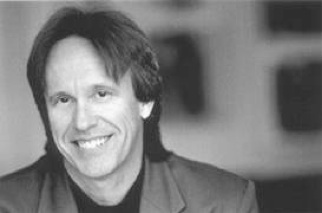
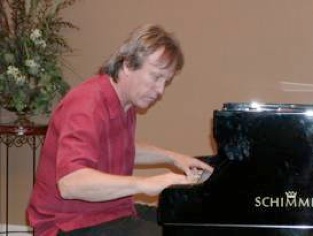
Wayne Gratz has been one of my favorite composers since I discovered his music around 1989. We did a couple of interviews in the early '90’s, and then lost touch for awhile, so doing this interview was kind of a reunion, which was fun! Like his music, Wayne is soft-spoken and thoughtful, and is very down-to-earth. He recently completed his seventh album on the Narada label, “A Place Without Noise,” and has also been doing albums for a series put out by Hallmark. Based in central Florida, Wayne also plays in a band called Paradise that performs for conventions and large social gatherings. We did a phone interview in 8/02, and here are some of the things we talked about:
KP: What’s been happening the past several years?
Gratz: Well, I’ve been doing a lot of the same things as far as writing, and I’ve put out a lot of albums over the years. I just did another Hallmark album that was finished in January. I haven’t done anything since. I have entirely too much free time right now. I’m going to get my piano tuned next week and I’m going to try to start writing again. I’ve hit kind of a brick wall, but that happens from time to time. I have a studio in my house now, and I have a really nice (Yamaha) C7 piano so I’m able to record everything here at home. The great thing about having a piano here is that I can sit down and do an improvisation, and it’s a master - I don’t have to re-record it. I have a good recording console and really good mics and the MIDI stuff - although I’m not doing much MIDI anymore. On the last album, “A Place Without Noise,” the synths are really light and in the background. We had cello and some synth beds - I used MIDI for those, but as far as the piano, that’s all audio. I try not to do any punches. Everything is pretty much front to back. I don’t edit things much - I think I edited one thing on that whole album. If there’s a little timing inconsistency or something in the middle but the rest of the song is good, I feel like it’s fine.
KP: Just call it “rubato”.
Gratz: Right! [laughs] As long as the feel of the song is there. That’s what I like about doing improvisations.
KP: I remember your saying awhile ago that you often sit down and improvise through the night. Have you found that your playing style has changed a bit since your divorce? Are you a little more like Rachmaninoff now?
Gratz: I wish! My playing style has become more free-form, I think. When I look back to the first album, everything was a lot more structured. I would play songs exactly the same way, except for the solos - I would always improv those, but I otherwise, I played them the same way. Now, I have to go back and learn the stuff that I’ve recorded. I did a concert a few weeks ago, and I had to learn the music from “A Place Without Noise”. On all of that album, I started with a theme, and the rest of the album was off the top of my head, so going back and learning it all was not easy to do. I guarantee that I never play any of those songs the same way twice. It’s in the back of your mind that you know that you’ve played a song, and parts of it feel familiar, but getting all the melodies to stay in your head is tricky. It’s a matter of listening to the music a lot. If you listen to it a lot, you know you can do it by ear.
KP: You’re pretty-much the last of the original pianists on Narada.
Gratz: Yeah, everyone else is gone. I was supposed to do six albums with them, but “A Place Without Noise” is number seven. The label has really changed a lot. The music is much different now. They’re putting out more world and folk music, and they have the smooth jazz label now, too. I guess they’re selling records, though. New Age music has taken kind of a tumble, I think. The sections in the record stores are really tiny now, and a lot of the retail record places are going out of business. The internet is killing everybody, I think. Plus, it’s so easy to make copies of stuff.
KP: It will be interesting to see how it all evolves. There are so many independent artists in the contemporary instrumental/new age genre, and the internet is about the only way they can get their music out there. No one else will carry them.
Gratz: If you can sell on the internet, that’s great. Amazon’s real good and has everything stocked, but you can download from MP3. I guess people pay a fee when they download, but I don’t recall seeing any royalties from it yet.
KP: There are just so many royalties rolling in, right?
Gratz: Yeah, right! Digital cable plays our stuff a lot, and every time it gets played, I make maybe a quarter of a penny.
KP: Gee, that adds up fast!
Gratz: Yeah, before you know it, you’ve got fifteen cents!
KP: You used to say that performing solo made you overwhelmingly nervous, but I read recently that you’d love to do a national tour. What changed?
Gratz: Well, I’d just have to do it overwhelmingly nervous! If I did it all the time, I would get over it. I still get nervous, but some people get debilitated, and that doesn’t happen. I’m usually nervous for a song or two, and I’m always afraid that I’m going to hit a wrong note or just space out. Once I get through the first couple of songs, then I’m fine. I still play with the band (Paradise), and I’m never at all nervous playing with them because I’ve been doing it for so long. But, I haven’t played solo piano that much in front of people. If I’m playing background piano where people aren’t paying that much attention, I have absolutely no problem with that. It’s when you have people seated and every eye is on every move you make, it’s really a hot seat.
KP: You more or less live in two musical worlds. You do a lot of pop and good-time music with Paradise, and then your own music is very different. I don’t hear much of a pop influence in your original work at all. How do you keep them so separate? Or is that just being a Gemini?
Gratz: Probably! I don’t know. I never really thought about it. There really isn’t any pop influence in my music. I think my music comes from a different level in my mind, and I think it’s definitely from my subconscious, so that’s probably why. It’s a different process when you’re learning other people’s music, as opposed to composing your own. I never really thought about that, but I definitely keep them separate. I tried to write at the pop level for awhile, and I just didn’t feel like I was good at it. I couldn’t come up with “hooky” stuff; and lyrics - I can’t write lyrics.
KP: I have to be depressed.
Gratz: To write lyrics? But you write poetry.
KP: I used to, but like I say, I have to be depressed, and I haven’t written anything for a long time.
Gratz: Well, that’s good if you haven’t been depressed! You wrote lyrics to “Chest in the Attic.” They were great, fantastic.
KP: That was a strange experience because I felt such an attachment to that song. I would be driving in my car, back off the beaten path, and those words were just so intense. I had to hurry home and write them down, but I think that’s the last thing that I wrote.
KP: Who are your musical influences?
Gratz: I listen to Lyle Lovett the most, and he’s probably my favorite artist right now. My younger influences were Keith Emerson, Rick Wakeman, Rachmaninoff, John Williams, and Aaron Copland.
KP: How is “A Place Without Noise” doing?
Gratz: I guess I’m selling a few. I’m not selling a million. I think it’s catching on because I get a lot of compliments on it.
KP: The people who hear it love it. When I tell the parents of my students that I teach a lot of new age piano, I often get rolled eyes, but if I tell them I teach a lot of contemporary composers, then it’s a different story.
Gratz: The “new age” term - that’s what really shot the market. I’m still trying to figure out why.
KP: And why it hasn’t evolved into something else, because everyone knows that the term is misleading.
Gratz: It’s piano music! But it’s labeled now, and when something is labeled, it’s hard to change it. I really love the review you wrote of my album! I like all of your reviews of my music.
KP: Oh good! Thank you! You know I love your music!
Gratz: How many times to you listen to a CD before you review it?
KP: Usually 5-10. I put most of the CDs in the car and listen to them there for the better part of a week. I figure an artist has probably spent close to a year putting an album together - I can give the music a couple of hours. A lot of stuff I really don’t like the first time, and sometimes, that’s what ends up being my favorite - especially if it’s more complicated. Or like yours, where it’s not really structured. You need to really listen to it to hear and understand everything that’s there.
KP: How long did you take piano lessons?
Gratz: I think I started taking lessons in third grade and stopped in seventh grade. I took for four years. Then I quit and played guitar, and I started playing piano again when I was about sixteen. Mostly by ear, though.
KP: And you were also a swimmer?
Gratz: Yeah, I did lots of swimming in high school. I probably swam from Reading to California!
KP: And you turned down several athletic scholarships to stay with music?
Gratz: Yes.
KP: What’s your favorite hobby?
Gratz: Fishing. I’m not doing it as much as before, but I still enjoy it.
KP: Is any of your music being used on TV for sports or anything?
Gratz: The last thing they used was really good for me. It was an Ivory Soap commercial. Brooke Shields was in it. They used “Summer Fields.” It turned out to be a really good national commercial, but I never saw it on television. This was a couple of years ago, and those kinds of things can always come along at any time. They can pay your salary for the next year.
KP: What’s the new Hallmark album?
Gratz: There are a couple of them that came out last year. One is called “Tubby Time.”
KP: Is that “tubby” as in “bathtub”?
Gratz: It’s a children’s album. If you get a chance, listen to it. That CD came out really, really good. It’s totally not what I do as far as my own music. It’s all cover music, but I used a local singer who is absolutely brilliant. We had a great time doing that CD. I had kids over here singing in the background, so I had a lot of fun. The other one, “Another Slow Dance,” is also cover music. I don’t remember what all is on it - mostly contemporary ballads. I used the Orlando Orchestra on it.
KP: Is this going to be a continuing series?
Gratz: Yeah. I hope so. They keep buying the product, so I guess they’re selling them.
KP: It must be kind of sad that the cover tunes outsell your original music.
Gratz: Yeah, well, really.
KP: I’m sorry, but it really bothers me!
Gratz: I know exactly what you’re saying. People see songs they know, and it’s different.
KP: I don’t understand the mindset, but it seems like people have gotten less and less adventurous. Getting them to try new things can be really difficult, but as soon as they’re exposed, they like it.
KP: Do you have any solo concerts lined up?
Gratz: I’m doing a Borders gig in December. Those are fun. There’s no pressure, but it costs me to play there. I have to rent the piano. I’ve been thinking about learning how to move mine.
KP: But then you have all the wear and tear on the piano, though.
Gratz: I know, I thought about that, too.
KP: Do you have any words of advice for young people studying the piano now?
Gratz: Learn other things in addition to the piano, especially anything that has to do with the computer. Always try to make playing and learning the piano fun. It should be from the heart.
Many thanks to Wayne for taking the time to do this interview! To read more about him and his music, visit
his website and check out his
Artist Page right here on MainlyPiano.com.
Kathy Parsons
September 2002