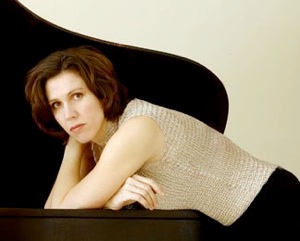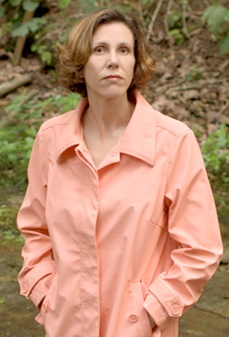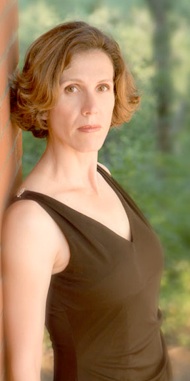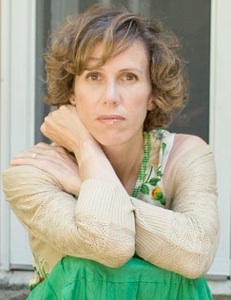
I was first introduced to Becky Archibald’s music shortly after she released her second CD, “The Long Ride Home,” in 2001. Since then, she has released “The Light At the End of the Blues” (2003), “The Christmas One” (2005), and just recently, “Mood Swing” (2007). As a reviewer, I always look forward to Becky Archibald’s new recordings for their originality, imagination, and frequent moments of unbridled fun at the piano. Many composers merge jazz and classical styles with varying degrees of success, but Archibald is truly the “real deal,” respecting musical traditions, but also refusing to stay in the “comfortable” modes and formulas so many choose. In this interview, she talks about taking the least comfortable paths in music and also about the need for everyone to explore their own creativity. A private piano teacher, performer, educator and lecturer at the college level, composer for piano and ensemble, wife, and mother of two teenagers, this is one busy and fascinating woman! I know you’ll enjoy getting to know her as much as I have!
Becky Archibald was born and raised in Indiana, where she still resides, spending most of her formative years in Kokomo, Indiana, about an hour north of Indianapolis. The daughter of an engineer dad and a mother who did “a variety of things,” including being a journeyman printer, Archibald’s is a very musical family. Her dad still plays trombone for the Kokomo Symphony, and her mom plays French horn and piano. Her sisters, Terri (Hofstrom) and Melody (Schrecker) are both musicians. Terri plays piano (and French horn in high school), and Melody plays bassoon. Her brother, John, played trumpet as a kid, but gave it up. Now he's a busy engineer who wishes he could play the piano! Here is our interview from November 2007:
KP: How old were you when you started playing the piano?
BA: I started messing around on the keys when I was about three. I had my first official teacher, Mrs. Van Pelt, at age five, when I was living in Lafayette, Indiana. She terrified me by clipping my fingernails at the first lesson. And I still take lessons! Every so often, I drive to Ball State University to work with Robert Palmer, who is an amazing teacher, a wonderful person. He always gives me a big hug and compliments me on my hair, so it's worth the trip!
KP: Were you encouraged to improvise or compose by your piano teacher(s)?
BA: Actually, no. Unfortunately, I think this is common.
KP: It sounds like you encourage your own students to improvise and be creative.
BA: Definitely. They make up their own ideas all the time, and I am such a cheerleader for it. I say “Wow, that was cool!” many times a day regarding my students' ideas, and I mean it! We've put out two books of student compositions: “Kids Compose” and “Kids Compose 2.”
KP: Wow! Have you had many students that you thought really had what it takes to compose or be professional players? If so, how can you tell?
BA: I don't think I can answer that. I believe each one of them could do it if they wanted to. I'm more interested in helping them tap into their creativity and learn skills for piano (and music in general) that they can enjoy throughout their lives, at any level that they want to pursue it.
KP: How long have you been a piano teacher?
BA: I started teaching while I was in high school, and have taught off and on since then.
KP: How many students do you have?
BA: For the past fifteen years I've had a solid group of students. Right now, I have about twenty-six.
KP: Did you play in school orchestras or bands? Did you enter piano or other music competitions?
BA: I didn't play in a group until I was working on my masters degree at California State University, Long Beach. I played celesta and keyboard in the Wind Ensemble, and even went on tour! In high school, I entered a local concerto competition, and also played in the state solo and ensemble competitions.
KP: Do you play other instruments?
BA: No, but it sure would be convenient to know how to play all the instruments! I think it would be great fun to be a percussionist.
KP: What kind of piano do you have?
BA: I have an 80-year-old Chickering that is in serious need of refinishing, but it has a great sound.
KP: I know you compose for other instruments as well as piano. Is that difficult if you don’t play an instrument you’re writing for?
BA: Yes, it's difficult, but that's partly why I'm attracted to it. It is so satisfying to imagine an instrumental line, write it down, listen to a player read through, and hear that it works! I just have to trust my instincts. Sure, I haven't played a cello, but I know its qualities from a lifetime of listening. And I rely on my "Orchestration" textbook and my musical friends to answer questions as they come up.
KP: Do you write the parts out by hand?
BA: I write everything out, then use "Finale" software to make it look official, which is absolutely amazing. I don't know how Beethoven could have gone without it!
KP: How old were you when you started improvising?
BA: I guess I was in my 30's. I don't remember being brave enough to play something that wasn't on the page before then.
KP: That’s a very interesting way to put it. I’ve had other composers say you have to give yourself permission to do your own music, and I think that’s very true. How old were you when you wrote your first song?
BA: I wrote some hymn arrangements in college, but didn't write my first original piece, “Searching,” until I was thirty-five, which was ten years ago.
KP: What inspired you to start composing your own music?
BA: I wanted to give my mom a homemade birthday present, so I decided to write her a song. This became the title track to my first CD, “Searching.” As soon as I started writing it, I knew I was hooked. Composing was the most exciting, terrifying, difficult, and satisfying thing I had ever done.
KP: Have you recorded most of the pieces you’ve composed?
BA: I’ve written more than a hundred pieces, and there are still a lot that haven't been recorded!
KP: When did you start playing professionally?
BA: While I was working on my masters degree, I had some paying gigs in California. I was a guest artist with the Garden Grove Symphony in their piano recital series, playing all classical music, but it wasn't really until I started writing my own music that I was able to have much of a career.
KP: You released "The Light at the End of the Blues" (2003) after being diagnosed with carpal tunnel syndrome, which required wearing splints for twenty-three hours a day. How long did that last, and how did you keep your sanity? Is this still a problem for you?
BA: I believe the splints were around the clock for two months, then just at night for a while after that. Later, my physical therapist said movement would have been the best thing for me, not keeping myself locked in position, but when you are in pain, you at least start by following doctor’s orders. When things didn't improve, I started taking advice from my musician friends and trying some alternative treatments (acupuncture, chiropractic, osteopathic, physical therapy, and massage - my personal favorite!!) Currently, I'm getting some help through something called muscle activation therapy, along with an exercise regimen, and rest. I still have daily pain, and have to curtail my urge to practice too much. I'm not sure if I did keep my sanity, but I found a way to continue to write music, because I could still put a pencil between two fingers with my splints on. That's how I wrote “The Light at the End of the Blues” and “Jaggedy Rag,” a surprisingly fun piece.
KP: Who or what are your biggest musical influences?
BA: That's always a hard question. Anyone who has ever moved me, whether jazz, classical, rock, singer/songwriter, or just a guy playing the guitar, has been an influence.
KP: Have you done any composing for films and/or TV?
BA: I wrote the score for “Coming To My Senses,” a short film by Chad Richards, an Indianapolis filmmaker. I also wrote music for the documentary “American Dreamer: Robert Indiana” by New York filmmaker Eric Breitbart. I loved the experience and hope to do more! Some of my music has been used on television here and in Canada. I've also written the score for a musical comedy, “The Pied Piper of Hoboken.” My husband, Alan, helped write the lyrics!
KP: That sounds like it must have been fun! Tell us a little bit about Alan.
BA: Alan is a big fan of mine! He pushes me in my career and is always thinking of new marketing ideas for me. He's very creative and a great writer - almost every word I write I run by him for editing and approval. His degree and work are in the counseling field, which makes him the perfect person to whine to at the end of the day. His pet project right now is The Growing Community, a nonprofit he formed to help fight local hunger and poverty by involving low-income youth in urban farming.
KP: What has been your most exciting musical moment or experience so far?
BA: Well, playing in Carnegie Hall's Weill Hall was pretty amazing. I was very sick up until the moment the concert started, and then, miraculously, I felt healed, and played my best. More recently, I performed an improvised piece with Bill Harley, a Grammy-winning storyteller. We had such a wonderful chemistry and enjoyed each others' ideas so much. It was fun to have everything work onstage and have such a great reaction from the audience. Another memorable moment was when I noticed a man beaming in the front row of one of my concerts a few years ago. Afterwards he walked up to me with a big smile and said, " I finally understand what music is!"
KP: Beautiful! Are there any specific pieces that you feel say the most about who you are as a person? Do you have any favorites, if they aren't the same pieces?
BA: Probably “Unspoken” because I am often too quiet when I should speak up. It's also a very passionate piece, full of mood changes. I have so many favorites, it’s hard to choose. I still really love “Searching.” Also “40's Love Song” from “The Long Ride Home” and “From Mozart To Me” from “The Light at the End of the Blues.” “A Really Mean Boogie-Woogie” is lots of fun (and maybe that says more about me than I want to admit!). “I Know,” the trio for clarinet, horn and piano is very enjoyable to perform; so is "Spring" for cello and piano. I guess I could go on and on!
KP: Is there a particular philosophy that you try to convey in your music?
BA: Interesting question. I try to be brave when I'm writing. I'm like an explorer looking for new territory. If a path that I'm headed on seems weird or scary or uneasy, I tend to go there and see where it's going to take me, and then I incorporate those discoveries in my music. I still like the “classical” ideas of development and change - they are great for stories, great for movies (as far as character development), and great for music. A theme should have some kind of transformation during the writing process. I also hope that the next piece I write is different than what I've written before and that I keep uncovering and revealing something new about music and about myself. A piece I wrote early on, which appears on my first CD, is called "Never the Same." I think that title says a lot about my philosophy.
KP: Who are your favorite composers?
BA: Beethoven, Chopin, Debussy, Gershwin, Scarlatti, Count Basie, Nelson Riddle (who wrote the great scores for Sinatra). Again, it's hard to stop with just those names!
KP: Who are your favorite performers?
BA: I just love to watch people who seem real and relaxed. I'm still amazed by Frank Sinatra and Tony Bennett.
KP: Do you have any hobbies?
BA: I forget what that means, I'm so busy with music. I do write poetry and short stories, though, and need to keep that up.
KP: What do you like to do in your free time, or do you have any?
BA: I like to watch “The Office” on Thursdays, and bake homemade chocolate chip cookies just beforehand. My 17-year-old son stretches out across the couch with his feet on my lap, and we laugh a lot. I love going to movies, but I haven't seen one for a long time! I also make sure I walk every day.
KP: What are your favorite colors?
BA: Definitely, red. Check out my clothes on my last two CD covers! I have lots of red around the house, too.
KP: I’m that way about purple! How old are your kids? Are they into music?
BA: My son, Taylor, is 17, and my daughter, Delaney, is 14. Taylor has played piano, cello, and guitar, but is kind of taking a break right now. Interestingly, his favorite CD is Gershwin's “Rhapsody in Blue.” My daughter has cerebral palsy and has difficulty with fine motor skills, so we have encouraged her singing, and she loves it! She knows every tune she has ever heard, and also makes up her own, always with perfect form and with a grand ending!
KP: If you could have any three wishes, what would they be?
BA: My daughter has so many difficulties, I wish that she could be healed from all of them. I wish everyone could discover their own creativity and spend most of their time on that. I think the world would be a better place if we all reserved daily time in a quiet, creative space. Third, I wish that everyone in the world had what they needed and enjoyed what they had, and that there wasn't such a thing as money! (Or maybe I just wish for money, but I wouldn't want other people to go without it just so I could have it.)
KP: Do you have any words of advice for young people who are studying music now?
BA: Practice more than I did, demand a lot from your teachers, and perform, perform, perform!
KP: What's up next for you?
BA: I'm very excited about the next two big things. Alex Ross, music critic for The New Yorker Magazine, is on tour promoting his new book, The Rest Is Noise: Listening to the Twentieth Century. He will make a stop in Indianapolis on December 3 to do a reading, and I will perform at the event! I discovered his writing about five years ago, and have been a big fan ever since. He is very well read, listens to everything, and is quite witty. I'm thrilled that he wants to collaborate with me. The program will be part of the Indianapolis Symphony Orchestra's First Monday Music Club, and WFYI public radio will do a live feed of their evening program, “The Classical Connection,” with Michael Toulouse. I will be playing solo piano, and also some of my chamber compositions with members of the orchestra. In January, the Indianapolis Chamber Orchestra will premiere a new work which they commissioned, titled “Sailing with Ludwig.” The idea was for me to write something inspired by Beethoven for their “Mozart vs. Beethoven” concert. The piece is an octet for clarinet, French horn, strings and piano. You might guess from the title that it's a fun piece!
Many thanks to Becky Archibald for taking time to share her life with us! For more information about Becky and her music, visit
her website and check out her
Artist Page here on MainlyPiano.com. Check out her Christmas album, “The Christmas One” - as well as “Mood Swing” and her other albums -you’ll love them!
Artist photos courtesy of Scott Schrecker at
scottschrecker.com.
Kathy Parsons
November 2007