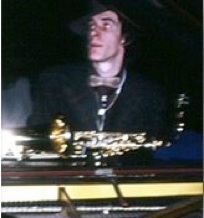
KP: You are an artist who wears quite a variety of hats. Tell us about it.
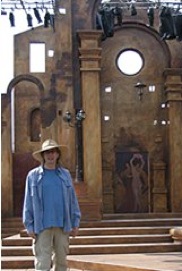
Mueller: Actually, I just bought a new straw fedora from someone on the street in the West Village last week. I love hats. My father had a collection of hats but they are all a little too small for me, so I have to build up my own. Plus, I'm going to wear a porkpie this Halloween as I dress up as Charles Mingus (my wife is dressing as Joni Mitchell).
Being involved in many projects, in different genres and disciplines, comes out of my varied interests and curiosities. Also out of opportunities. As an artist, I never know how I am going to make money 3-6 months from now, so I have to be nimble, go where the opportunities are. I also have an avid interest (love) of writing words, visual art, different modes of communication, live theatre, and a wide range of music. I've been able to make a few bucks in each discipline, but I mostly pursue a project because of something inside me that wants to learn. I begin researching a new curiosity and meet people who are doing something in the genre and become involved. Curiosity comes out of an obsession with something I don't know enough about yet, out of a personal void waiting to become form, you might say. So, I guess I wear many hats because of my own inadequacies as well as a desire to keep my hair from getting in my eyes.
KP: Ha ha! Your website (
www.tobinmueller.com) is fascinating with some of your artwork, photography, and writing as well as your music. Do you feel a stronger gravitational pull from any one direction or do you work on several different things at once?
Mueller: I used to work on many things at once, completing the final drafts of one project while beginning another project while setting up an upcoming project. But I'm getting older and have less ambition (or mental agility, perhaps). I like to work on one thing at a time now. Recently, it's been wherever I can get a commission or contract. Photography is something I do mainly in the spring, because flowers are my specialty, or while on vacation in autumn (great leaves and sunsets). Writing and theatre are things I do when I have paying prospects, but music is something I do constantly, every day - something I think about all the time. Beyond a gravitational pull, really; more like the earth's center itself.
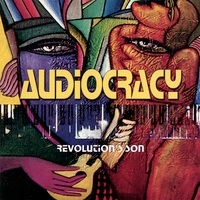
KP: Your two most-recent CDs were collaborative projects. Let’s talk a bit about Audiocracy first. What made you want to do a progressive rock album?
Mueller: I have loved progressive rock since I was a late teen. Bands like Yes, King Crimson, Gentle Giant, and players like Frank Zappa and Keith Emerson were a heavy influence on my music, even when I was writing purely classical or jazz. Progressive rock is this interesting mix of classically-trained virtuoso players, jazz cats and performers possessing a dramatic theatrical flare (especially for epic melodrama). I wrote two progressive rock opera musicals, one that was produced (Creature) and one that was never finished (Dreamless). Prog Rock is as central to me as Gershwin (my mother's favorite) or Stravinsky (my first favorite composer). Progressive rock combines metal, jazz, musical theatre, and classical stylings and is dedicated to exploring new sounds and new forms. How could I not be drawn to that?
On a personal level, I was getting back into the Hammond B3 organ and was looking for excuses to play. I had an aging group of old prog rocker friends that I needed to tap into before they all went blind or threw their backs out again. The timing was good.
KP: Did you do most of the writing for “Revolution’s Son”?
Mueller: Most of the writing is mine, as was the concept for the album. My son, who sings lead and plays bass, collaborated on two or three tracks. The only track that started with someone else's ideas is track two, the first draft totally written by our lead guitarist, originally designed to be an instrumental. After I added keys and words, the song changed character and blossomed into a choral prog tune.
The main aspect of collaboration is in how each player contributes to the arrangement of the songs. Much of Audiocracy is about texture, changes and harmonic interplay. It’s less about rhythm than most mainstream rock. Since everyone in the band is such a creative musician, their contributions to the arrangements constitute an important aspect of collaboration. This also affects the writing, on many levels.
Actually sitting down with someone else and writing in a collaborative fashion happened on only two tracks, both with my son. We both came in with bits and pieces of ideas and slowly threw down solid ideas that morphed and grew as we progressed. We built the pieces on tape, playing in sections, singing drafts, layer on layer. The lyrics went through several drafts as we evolved our concept/message of each song.
KP: Had you worked with your son on projects before Audiocracy? Has he been a musician for a long time?
Mueller: Anton has been performing with me since he was a little kid. He was in my traveling theatre troupe starting at age 6 or so. By the time he graduated from high school, I think he'd been in nearly 54 separate productions. I bought him a 5-string bass for his 15th birthday. He still plays it (he's 29).
KP: Does the band have any more projects in the works?
Mueller: I had wanted to do a second concept album, mainly because of additional musicians who wanted to collaborate, but the RAIN BATHER project intervened and Audiocracy lost momentum. I did do a small collaboration with Jon Anderson from Yes and was hoping that might turn into something more, but then his health began failing. I would never say “no” to more Audiocracy projects, but what I said about guys going blind and their backs (and wrists) having troubles, I wasn't joking. Plus, our drummer is touring with the number one Elvis impersonator band and that has been very successful for him. We might not ever get him back. My son is now in three other bands, so his time is limited. If we do another project, it may be a purely instrumental. I like that idea, actually. I may begin something in 2010...
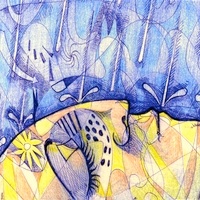
KP: This year’s Rain Bather was especially interesting in that it has tracks that were passed around the internet for the various musicians to add their parts. Did you have suggestions for the musicians to follow, or did you leave their parts strictly up to them?
Mueller: Both. I wrote out every note for the clarinetist on "Last Song On Vaudeville", but let him do whatever he wanted in two others ("Caught In The Current" and "Secret of Life"). I only counseled him to use melodic motifs and not rely on jazz scales. RAIN BATHER is a very melodic, very composed-through jazz.
Only three players added their parts after-the-fact via the internet without me being there: the clarinetist, the fiddle player, and the guitarist. All the other players were together for most of the sessions, although a few lines were added in overdubbing sessions in the studio, like the multiple sax layers added by Woody Mankowski in track 6, "Windowshade."
KP: How do you handle additions when you aren't there to oversee the playing?
Mueller: When someone adds a part without me present, I always ask them to keep each of their takes on separate tracks so I can choose, edit, cut & paste, and otherwise rearrange them. Many times I need to move phrases or hits to fix timing issues. (I used the program "Live" for this, which has fabulous re-beating tools.) I sometimes move whole phrases into different parts of the song, or use one part of a phrase from one take and another from a second take, to better express what I think works best in the moment. All the players got a kick out of my manipulations except the guitarist, who may never work with me again. There were terrible latency issues in the software he was using, and I had to reconstruct his contributions in a major way. He didn't appreciate the changes that resulted, especially in the tone of his (time-stretched) guitar. But I attribute that more to accidental software incompatibility than to artistic incompatibility. Now I only collaborate using Logic, ProTools or Digital Performer, software without issues for me.
KP: Eight of the thirteen tracks are music from Creature - The Musical, which was based on the Frankenstein legend. Did you write the play as well as the music?
Mueller: Yes. More than once. The first incarnation of the show was entitled "Frankenspell Superstar" and had a decidedly family-oriented spin. It toured in 1992 and had a run in NYC in 1995. I wrote all music and lyrics, performed all music on the background tape that the actors performed to. In 1996, I collaborated with a new director on a new script, retitling the show "Creature: A Man-Made Messiah." This new book musical was staged at the John Houseman Theater in NYC. I then got backers to rework the show as a sung-through musical (a rock opera, really), in 1996-7, under the title "Creature." This was the best version, very adult and very sexy, full of tragedy and intense emotions. My best work.
A few of the songs I used in RAIN BATHER are from earlier versions that needed to be dropped due to script changes. It was nice to give them a second life on the jazz CD.
KP: When was the play staged?
Mueller: 1992, 1995, 1996-7. There were plans for it to tour Germany in 2000 and then mount it on Broadway, but it was a Livent property and they went belly up in 2000. The producer (who was also my agent's boyfriend) lost his job, my agent moved to LA to go into television, and the creative team (that had just done the rival of Jesus Christ Superstar) dispersed fractiously (several will never work together again, due to the many problems that JCS encountered). So my one chance at mainstage Broadway fame collapsed. Then 9/11 hit, and tragic shows about the dead were no longer in vogue. Disney and the modern version of the pop rock variety show have taken over the musical theatre world here. That, and revivals. Even off-broadway has lost its sense of experimentation. Larger scale musicals are just too expensive to mount. (That's why Dreamless was never produced. It involved a bunch of high tech gadgetry that would be crazy to risk real money on. Also, it was about how the poor from Africa hijack several empty oil tankers and head toward America; and about how ancient gods use the internet to become reincarnate through users; and about how bio-cybernetic fetal experimentations create a digitally/internet connected Messiah child - all ideas that have since been used in mainstream sci-fi movies, even though they were original back when I thought them up.)
KP: Have you written other musicals as well?
Mueller: Several. I've had five shows staged in NYC. I've toured eight children's musicals. My latest show, which ran as part of the York Theatre's new play series, "Runners In A Dream," is about a little girl in the Holocaust. It’s for seven actors and a piano - a simple, beautiful, intimately dreamy show, much less bombastic than anything I've written for the stage before. I hope to have it performed by a college. I wrote all the music and collaborated with another writer from New York on the script and story. It’s about his mother, one of the few surviving children of the Holocaust. I hope it reaches a wider audience someday.
KP: I also read on your site that you have been writing a book based on your dreams. Is that project finished or is it ongoing?
Mueller: It’s finished. The PDFs are all online, in sections, from my website. (I think there are five PDFs in all.) It’s free, since it is really a sort of dream journal and includes all sorts of copyrighted art. I wrote that because I wanted to explore my dreams, not because anyone would ever want to buy the book, but I've received some very cool email from people who read it and shared their own dreams in return. I printed and bound five copies for myself and my four kids, but everyone else has to view them in PDF format.
KP: Let’s talk about the book a bit.
Mueller: I started exploring my own dreams 20 years ago when I was in college. I used to set my alarm for 5 A.M. so that I'd sleep lighter during those final hours of sleep. Better for remembering dreams. Also, my most recent solo piano project used a lot of subconscious, dreamlike inspiration. It re-ignited my interest in dream exploration. So I organized my dreams in a loose narrative in which fellow dream-explorers might find resonance.
KP: I really enjoy looking at your photography. I’m an avid shutterbug myself. Have you done much commissioned photography?
Mueller: I love synthesizing the world through artistic impressions. Photography is a fascinating aspect of that: editing the world through framing angles, filtering light, processing colorations. Because I sell most of my photography to hotels, I need to use very high-res images (they are often enlarged to 36"). Sometimes I take four images and knit them together. I specialize in two genres: close-ups of flowers and Cape Cod sunsets. I use a macro lens for the flowers and plenty of patience for the sunsets.
I have been the photographer of a few events, one wedding, but I am not really set up for that sort of shooting. I prefer close-up, artistic, unusual portraits, something where I can substitute imaginative ideas (which I have) for expensive equipment (which I don't have).
KP: You founded an organization called Arts Forge. What is it?
Mueller: It was an idea to create a portal in which I could direct multi-media/multi-genre projects, combining digital art, music, storytelling and programming. The major efforts were a fun collaboration on a video game in the late 90s and a few music collaborations. The crown jewel was supposed to be a series of ebooks, but that fell through when my business partner decided not to purchase a fledgling ebook company, believing that no one would read a book on a small flat screen. (Ten years before the Kindle, sadly.) There are still many vestiges of the original enthusiasm - a great art gallery, some interesting poetry, a few storyboards - but the gallery is really the only aspect of the site that is still of much value. I have replaced ArtsForge.com with
TobinMueller.com as a site that describes what I am currently working on.
KP: What are you working on now?
Mueller: Waiting for a new project. I have two more piano commissions in the offing, although the economy has slowed that sort of spending and both are in limbo. I'm supplying a bunch of music to a new Creative Commons music website, meant to sell one-time fee music for documentaries, film, advertising, TV and web projects. I'm enjoying a year break from high intensity projects. Actually, I've done a lot of swing trading and learning about options and futures trading.
KP: That could be even riskier than the music biz! The first two of your albums that I reviewed were solo piano. I really like 13 Masks a lot. Do you plan to do any more solo piano?
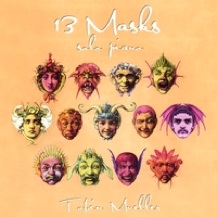
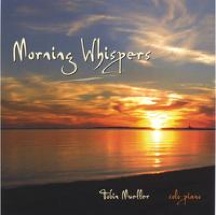
Mueller: I hope to do several more. There is something special about expressing yourself as a solo artist. In fact, the original catalyst for my first album piano was provided by my wife's off-hand comment, "You should just do something by yourself. You've worked with other people your whole career. I get to listen to you play piano every night. Why not let others?" I had done musical theatre for 20 years. There is a built-in bureaucratic business aspect meant to please producers and directors. (A process which often brings out the best in everyone, by the way, and can result in a stronger product, but may not necessarily be personally fulfilling.) So I began to search for a commission to write and record my solo music. The result was MORNING WHISPERS, a cycle of songs meant to "heal and uplift," according to the commission, although to me most of the songs are wrapped in a sense of tragic expectation and loss. It's my prettiest album. I had such a great time working on it, I tried to land another commission before I was finished. 13 MASKS was my second, meant to explore a more wild, chaotic aspect of the subconscious than I mined in MORNING WHISPERS. Two sides of my personality. I like comparing the two albums.
I have an idea for a piano duet album, with me playing both parts, as well as other conceptual solo projects. I'm still hoping for commissions to enable them to proceed. I have begun working on ideas in my head for each. I hope to bring them to life in the next few years. We'll see.
KP: Let’s throw in some background questions. Where did you grow up?
Mueller: Wisconsin. My father was a chemist and my mother was a stay-at-home mom who wanted to be a jazz singer. When I was 13 years old I started helping her arrange music for a group that performed condensed versions of musicals every December. Also, as the youngest of four kids, I learned from my older siblings, each of whom played different instruments. Mom used to arrange four-part music for us when I was growing up, kind of a Von Trapp thing.
I lived in Wisconsin until my forties, when I made the transition to New York City. (I was spending half a year here then, anyway, with projects that would be performed in Manhattan.) Aside from being a Packer fan, I consider myself an east coaster now.
KP: When did you start playing the piano?
Mueller: I was forced to take piano lessons as a kid, but I disliked playing other people's music, even in 3rd grade. Also, one of my brothers was an excellent guitarist and he always thought in terms of chords, so I began to learn how to improvise music using chords. Kind of like how Yamaha music lessons teach kids nowadays, but there wasn't anything like that back then. My other brother played piano and often played Beethoven on the hi-fi while pretending to direct the orchestra, calling out entrances, etc., so I learned my first directing techniques on the floor of the family room. We had a musical family.
I wrote background music to an original play while I was a junior in high school and wrote a symphony while a senior that was performed by an area college (Lawrence University, where I was taking private composition lessons). I used the symphony score to get into composition school at the University of Wisconsin. I had several fabulous piano instructors and compositions teachers, all wonderful characters. I enjoyed hearing their stories and listening to them play more than explaining my own works to them. Sometimes I wish I would’ve stayed and become a professor of music, but by the time I was finished, I just couldn’t stand the idea of school anymore; campus had become claustrophobic. Now I love going on campuses, the whole student energy, the freedom to write for an academic audience. Maybe in an alternative life...
KP: Do you play other musical instruments, too?
Mueller: As a composition student, we had to take fundamentals of every instrument, so I've pretended to play everything. Saxophone was my favorite for years, until I had to sell it to pay for the birth of my first child. I also played flute, clarinet, and guitar. I used to sing quit a bit, but kind of destroyed my vocal endurance in 1995 when I was musical director of a show in which half of the actors couldn't read music; I sang for eight hours a day and had pain for months, lost my upper range. Now I only play keyboards and sing occasionally for short periods.
KP: Where are you located?
Mueller: After living and working in Manhattan, I have moved out just over the border into Connecticut. Now I have a yard and gardens and quiet.
KP: Have you always been a professional musician?
Mueller: I consider myself having been a professional composer my entire life. I've actually done more stage directing and musical direction than straight musician performing. In the 80s, I also did a lot of writing: books and columns. In the last few years, I've also done product reviews, photography, studio work, and have done web design since 1998.
KP: Who are some of your favorite composers?
Mueller: Beethoven, Debussy, Chopin, Stravinsky; Gershwin, Arlen, Ellington, Sondheim; Dylan, Paul Simon, Joni Mitchell, Ben Folds, Yes.
KP: Who and what are some of your musical influences?
Mueller: As a composer/lyricist, too many to list properly, let alone discuss. See list above.
My piano influences start with Victor Borge and Liberace; as a kid I loved watching them. They made the piano into something more than an instrument. Then a young Van Cliburn took the world by storm, making it okay to be an American pianist. But my real influences, as I matured, were Thelonious Monk and Dave Brubeck, Chick Corea and Keith Emerson. You can hear all four men in my solo piano work.
KP: What do you see in the future in terms of the music industry?
Mueller: More video, more internet. Less money. Continued fracturing and a heightened importance of nostalgia. The most fulfilling aspects of intimate performance will expand into more small internet communities. But people will crave even more live music, and I hope all those internet artists play in front of live audience to keep their spiritual connection and chops alive.
KP: Do you perform in concert very often?
Mueller: Much less than I used to. My commissions result in a small performance, sometimes as small as a house concert (albeit, in a large donor house). I prefer to avoid stress, no longer thrive on it. I like working in the studio so I can chose from various takes, edit myself on the fly. I enjoy my private, unscheduled life. I'm glad I don't have to carry heavy speakers or large keyboards around anymore.
KP: Is there anything else you’d like to talk about?
Mueller: There is a necessary horizontal aspect to the internet, since no one source decides what is good, what should be listened to. I like that, although the visibility of new music lasts mere minutes as the newest post supersedes all else. But I truly enjoy that shared music is no longer for the professional, that the internet is our new campfire around which we share anything and everything, encouraging participation instead of mere passive consumption. It may well mean that the heyday of the professional musician is past, since technology makes recording so inexpensive and people are willing to play and share for free. But that might be a good thing, if the point is to integrate music into life as a natural and fundamental nutrient.
Thank you, Kathy, for providing an outlet for talent that is otherwise difficult to find. Sites like yours are a part of that new cultural revolution.
For more about Tobin and his music, check out
his website and his
Artist Page that includes many, many reviews of his albums!
Kathy Parsons
October 2009